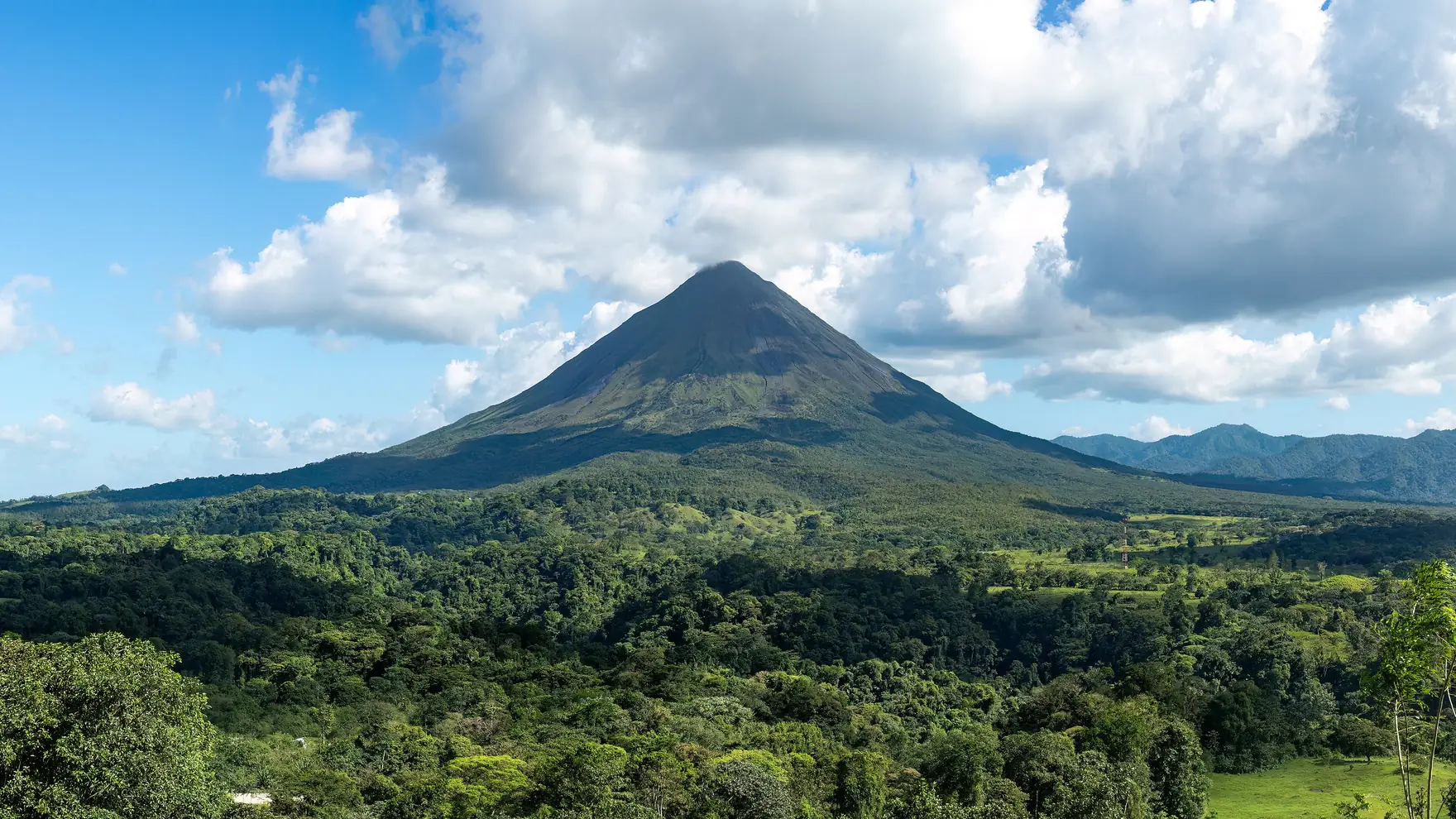
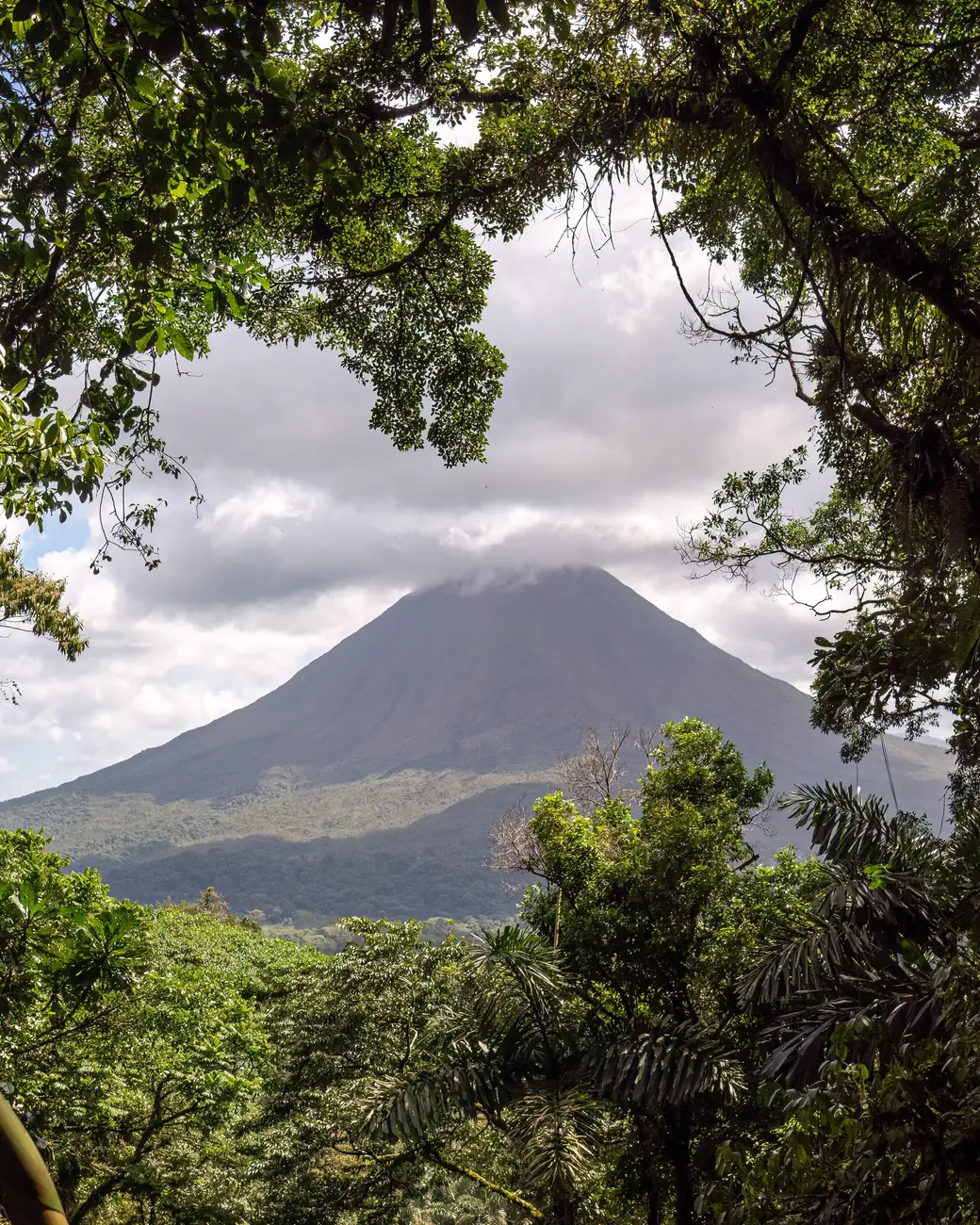
Cone do vulcão Arenal erguendo-se sobre a floresta tropical da Costa Rica

Costa Rica · Central America

Pura vida,
in the most literal sense

There is a country where the forest still gives the orders: a perfectly shaped volcano heats entire rivers, sloths cross the hotel garden, and the national philosophy fits into two words that serve as good morning, thank you and a toast. In Costa Rica, luxury means nature in the front row — all designed tailor made.

6%of the planet's biodiversity on just 0.03% of the Earth's surface
26%of the territory protected as national parks and reserves
0armies since 1948 — the budget went to nature and education
100%tailor made — route, pace and experiences designed for you

The destination

The country that
chose nature

Costa Rica is smaller than West Virginia — and home to roughly half a million species. Squeezed between two oceans, it holds one of the greatest densities of life on the planet: more bird species than the United States and Canada combined, forests running from sea level up into the clouds, and wildlife that elsewhere is luck and here is routine.

None of it happened by chance. In 1948 the country abolished its army and redirected the budget to education and conservation; today more than a quarter of its territory is protected and its electricity comes almost entirely from renewable sources. This is where ecotourism as the world knows it was born — and, over the past decade, its most sophisticated version: architect-designed lodges where the room ends and the jungle begins.

The classic route is a crescendo: Arenal volcano and its hot springs, the cloud forest of Monteverde, the jungle meeting the sea at Manuel Antonio and, to finish, the golden beaches of Guanacaste. Each chapter has its own climate, scenery and cast — and the order, pace and length are always designed around you.

Volcanoes & hot springs Cloud forest Sloths & toucans Pacific beaches Eco-luxury Family & adventure

Vulcão Arenal com seu cone quase perfeito cercado de floresta tropical Arenal · Volcano & hot springs

First chapter

The volcano that heats the forest

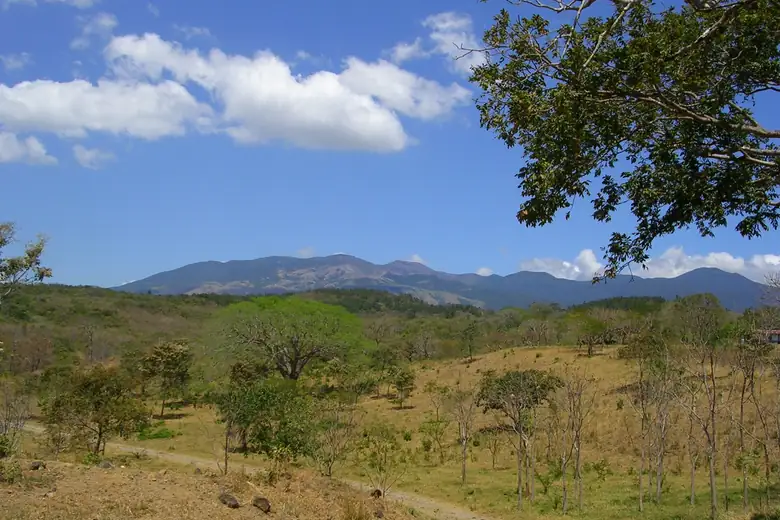
Few landscapes on the continent are this instantly recognisable: a 1,670-metre cone, as symmetrical as a child's drawing, rising alone above the forest and the lake. Arenal spent decades in eruption and sleeps today — but it keeps working underneath: it is the volcano that heats the region's rivers, turned into thermal pools cascading down through tropical gardens.

La Fortuna, at the foot of the volcano, has become the capital of elegant adventure: hanging bridges over the canopy, emerald waterfalls, horseback rides along the lake — and, at the end of the day, the ritual that sums Arenal up: sinking into warm water in the open air as the volcano's silhouette darkens against the sky.

  • 1,670 m of near-perfect cone above the forest
  • ±40 °C in hot springs heated by the volcano itself
  • 2 settings minutes apart: jungle and lake
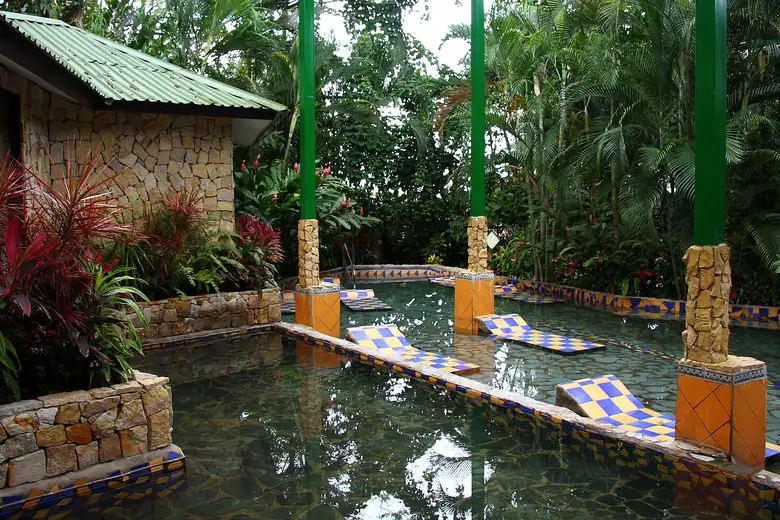
Piscinas termais naturais em meio à vegetação tropical na região do Arenal
The ritual

Hot springs in the forest

Rivers heated by the volcano itself tumble down through cascades and pools carved among gardens — some of them private, yours alone. Late afternoon there, glass in hand and forest all around, is the moment nobody ever cuts from the itinerary.

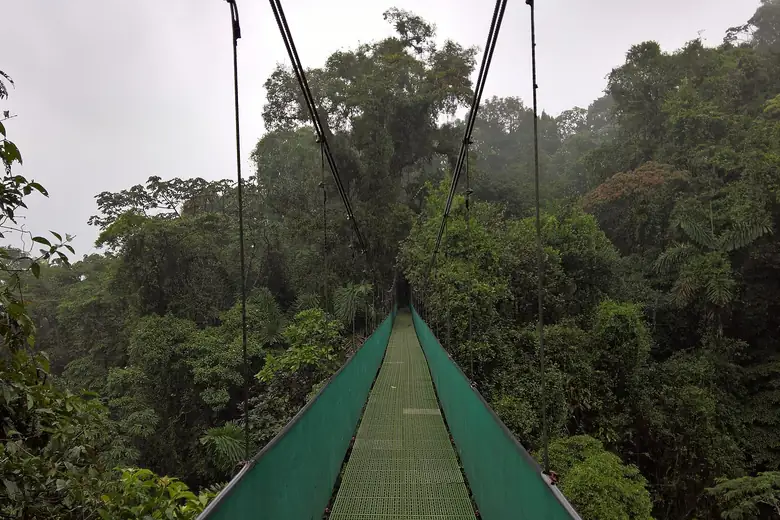
Ponte suspensa cruzando o dossel da floresta tropical na Costa Rica
With children

The hanging bridges

Walkways strung at canopy height cross ravines of pure forest — the easiest way to see the treetops from the inside. With a naturalist guide and their scope, the walk becomes a treasure hunt: toucans, sloths, orchids the size of a button.

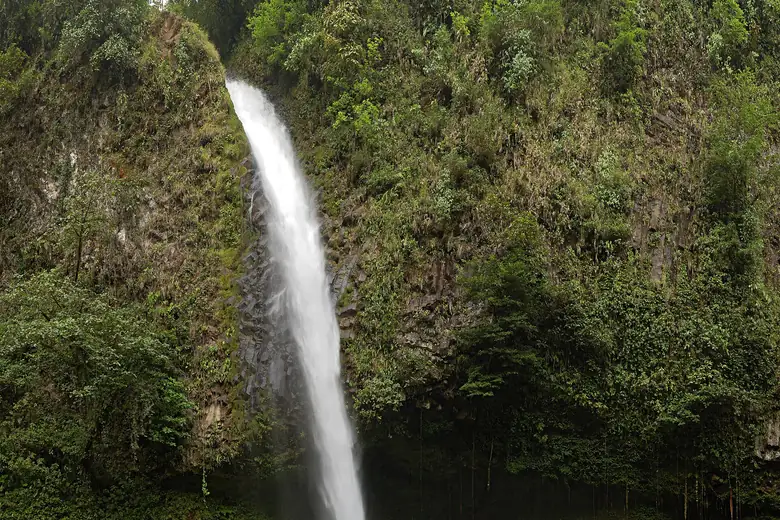
Cachoeira de La Fortuna despencando num poço esmeralda cercado de selva
For everyone

La Fortuna waterfall

Seventy metres of free fall into an emerald pool ringed by walls of jungle. You descend a scenic staircase, swim in the cool water — and climb back up feeling you have visited the heart of the country. Early in the morning, it is almost all yours.

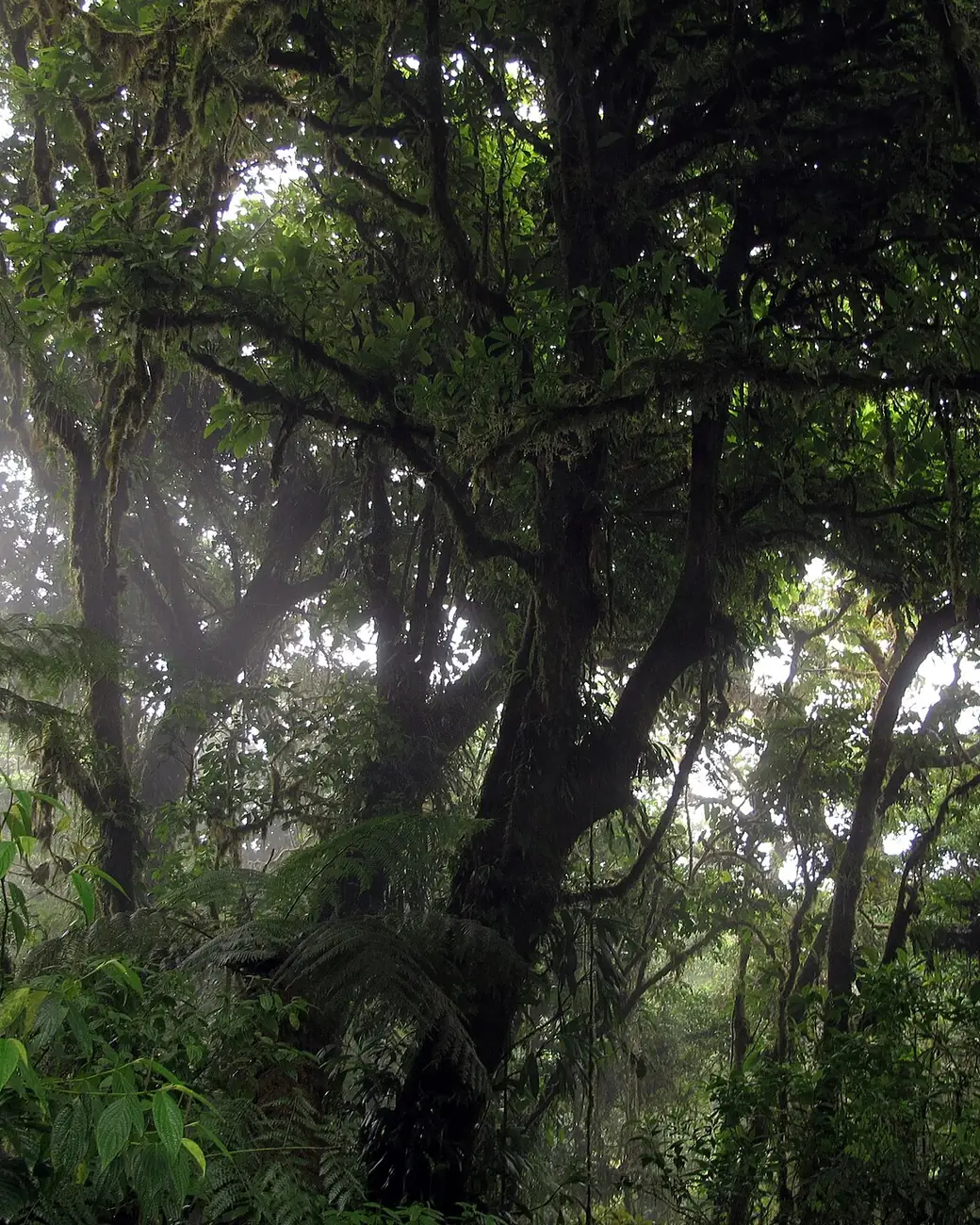
Trilha em meio à névoa e à vegetação da floresta nublada de Monteverde Monteverde · Cloud forest

Second chapter

The forest that lives inside the clouds

At 1,400 metres of altitude, the clouds do not pass over Monteverde — they live there. The permanent mist has created a forest that looks invented: trunks upholstered in moss, orchids and bromeliads on every branch, ferns the size of trees. It is one of the rarest and richest ecosystems on the planet, and walking through it feels like entering an aquarium of fog.

This is also where Costa Rica invented its national sport: canopy zip lines, crossing entire valleys at cloud height. Between one flight and the next, the region keeps hummingbirds by the dozen, highland coffee farms — and the most coveted resident in the Americas: the resplendent quetzal, the bird the Maya held sacred.

  • 1,400 m of altitude, with the forest inside the mist
  • 500+ orchid species in the region
  • 1 sacred bird to look for: the quetzal
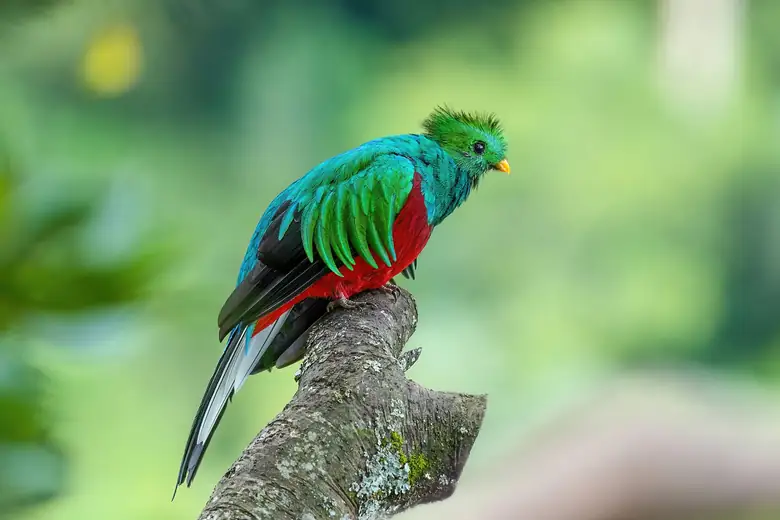
Quetzal-resplandecente pousado num galho da floresta nublada
The trophy

The search for the quetzal

Emerald green, a crimson chest and a tail that trails like a comet: the quetzal is the bird that fills photographers' memories. You set out at dawn with a guide who knows the wild avocado trees where it feeds — and the first sighting draws a gasp from absolutely everyone.

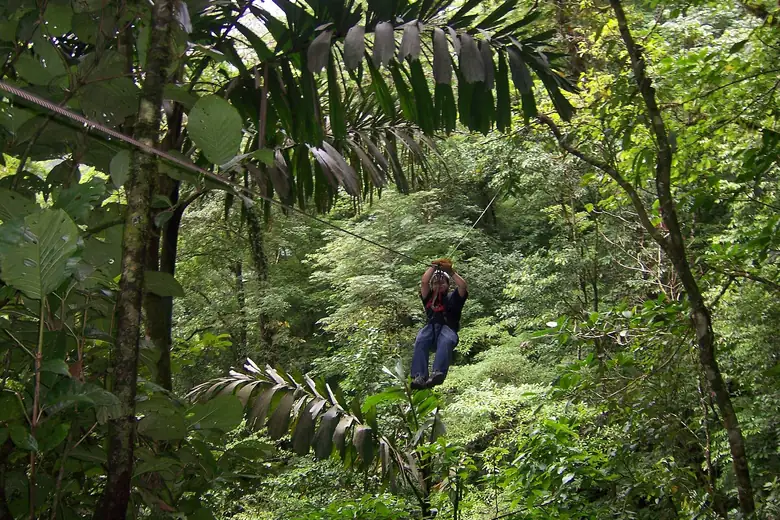
Tirolesa cruzando o vale acima das copas da floresta de Monteverde
With children

The original canopy tour

Canopy zip lines were born in Monteverde — and here they remain unbeatable: cables crossing entire valleys inside and above the clouds. There is a circuit for every level of courage, from gentle walkways to kilometre-long flights. Adrenaline with scenery to spare.

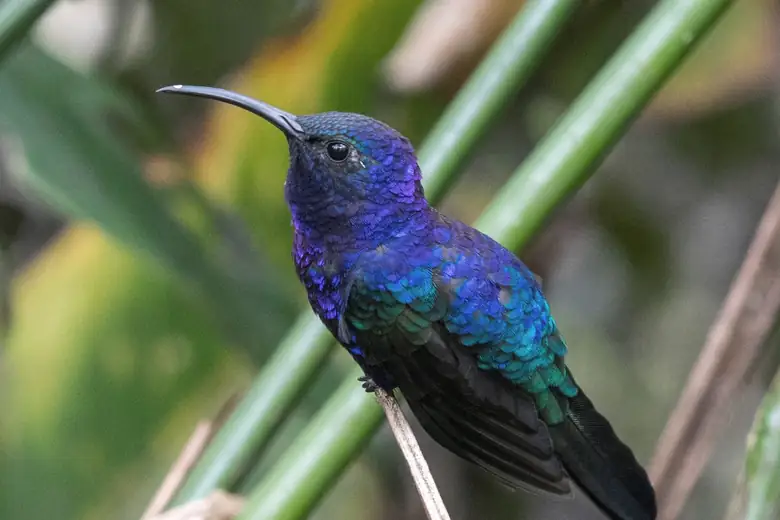
Beija-flor de plumagem violeta em pleno voo na floresta nublada
For everyone

Hummingbirds & highland coffee

In Monteverde's gardens, dozens of hummingbirds keep up a permanent ballet a hand's width from your face. Then a family farm walks you through the journey of coffee — from tree to cup — with a tasting at the end. The gentlest, most photogenic afternoon in the highlands.

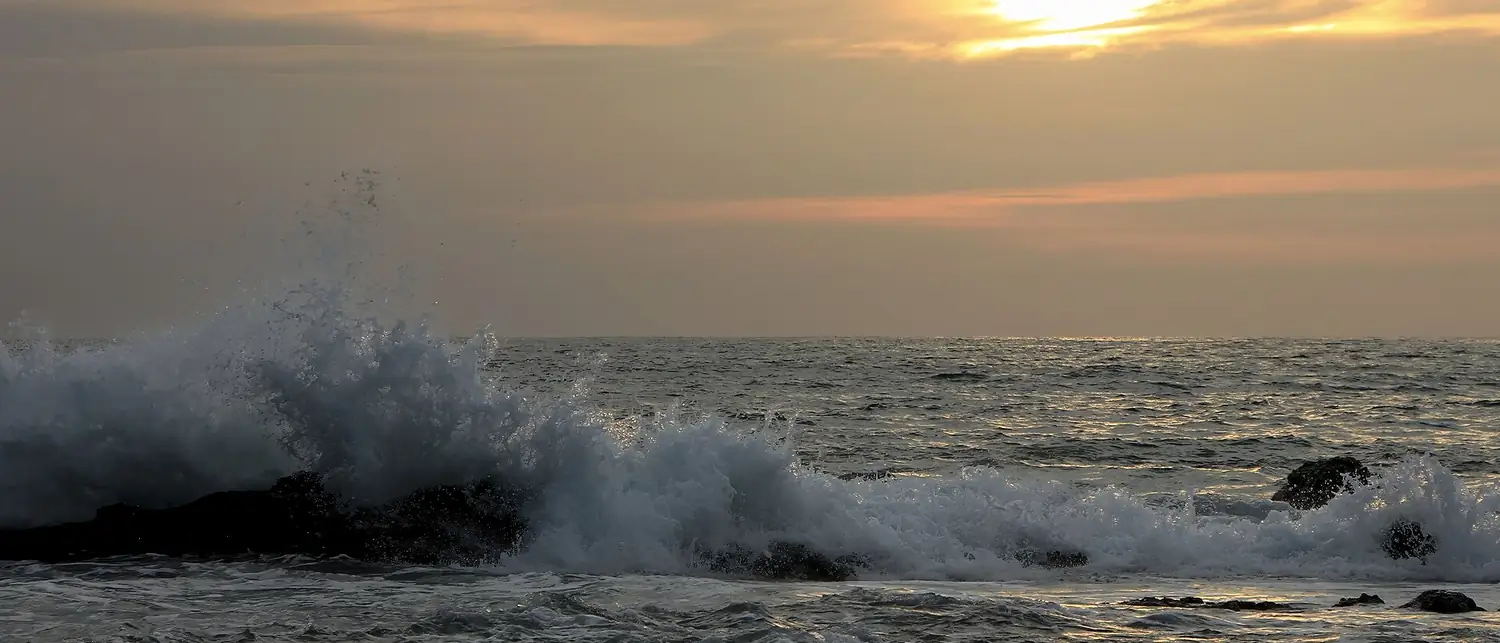
Pôr do sol dourado sobre o oceano Pacífico na costa da Costa Rica

The forest wakes up before you do: howler monkeys in the distance, mist sliding down the hillside, a toucan on the branch by your balcony. "Pura vida", says the whole country, all day long — and somewhere around day three you notice you are answering the same way.

From Brazil to Costa Rica, everything designed tailor made
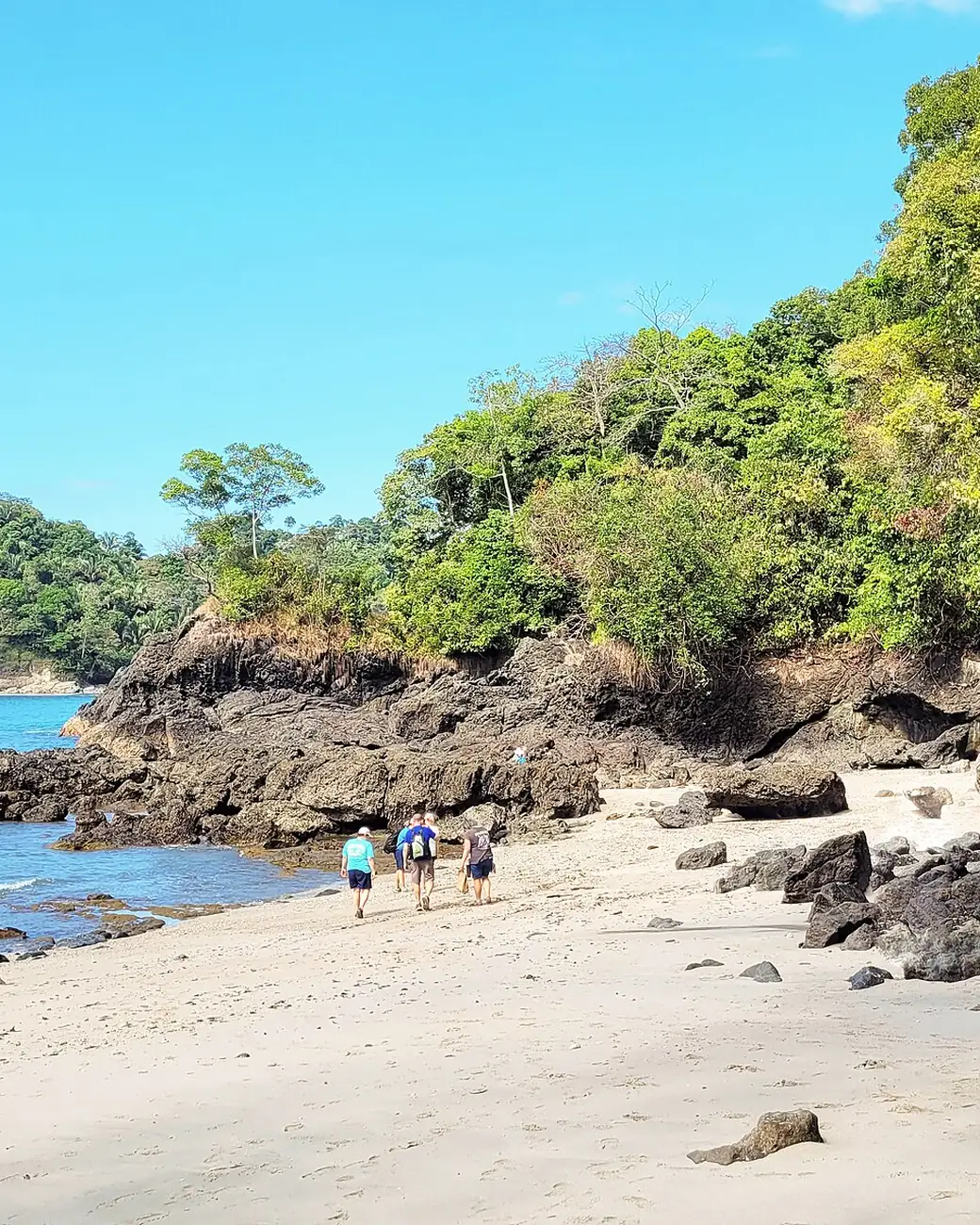
Praia de areia clara cercada de selva no parque nacional Manuel Antonio Manuel Antonio · Jungle & sea

Third chapter

Where the jungle runs down to the sea

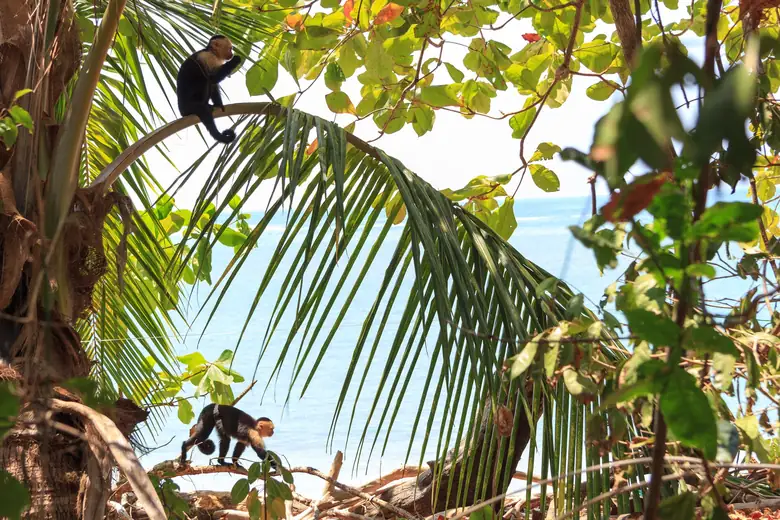
Manuel Antonio is Costa Rica's smallest national park — and perhaps its most generous. In a few hundred hectares, the forest tumbles downhill to crescent beaches of pale sand, and wildlife concentrates like nowhere else in the country: sloths, iguanas, coatis and three species of monkey, all within steps of the trail.

The perfect day here has two halves: in the morning, the park with a naturalist guide and their scope, turning apparently empty branches into a safari; in the afternoon, the sea — on the beach inside the park, on a sunset boat trip, or in the hotel pool hanging off the hillside between the jungle and the Pacific.

  • No. 1 in wildlife per square metre in the country
  • 3 monkey species, from capuchin to squirrel monkey
  • 2 in one: jungle trail and beach in the same morning
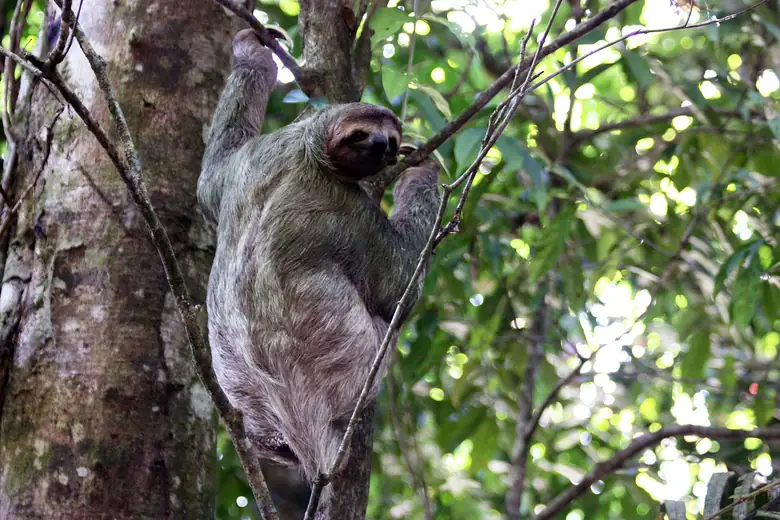
Preguiça-de-três-dedos pendurada num galho na Costa Rica
The icon

The sloth, at last

It is the country's unofficial mascot — and here it stops being a promise: draped in the cecropia trees, sloths show up on almost every guided walk. Through the guide's scope you can even see the permanent smile. It is the most photographed moment of the entire trip.

Macaco-prego-de-cara-branca entre as árvores próximas à praia de Manuel Antonio
With children

The beach inside the park

A crescent of pale sand and calm sea, framed by forest — with capuchin monkeys crossing the almond trees, watching for any lapse in attention. Swimming there, with the whole park around you, is the most beautiful playtime in Central America.

Arara-vermelha em pleno voo com as asas coloridas abertas
For everyone

The macaws of the Pacific

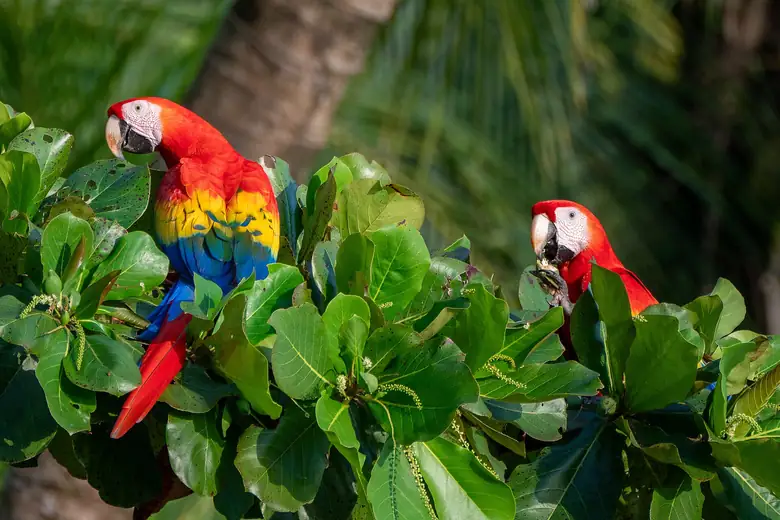
Along the central coast, Carara national park and the nearby rivers hold flocks of scarlet macaws — red, yellow and blue crossing the sky in pairs, always at full volume. A spectacle that punctuates the whole journey down the Pacific shore.

Praia dourada de Guanacaste com mar azul e vegetação ao fundo Guanacaste · The gold coast

Fourth chapter

The grand finale on the Pacific

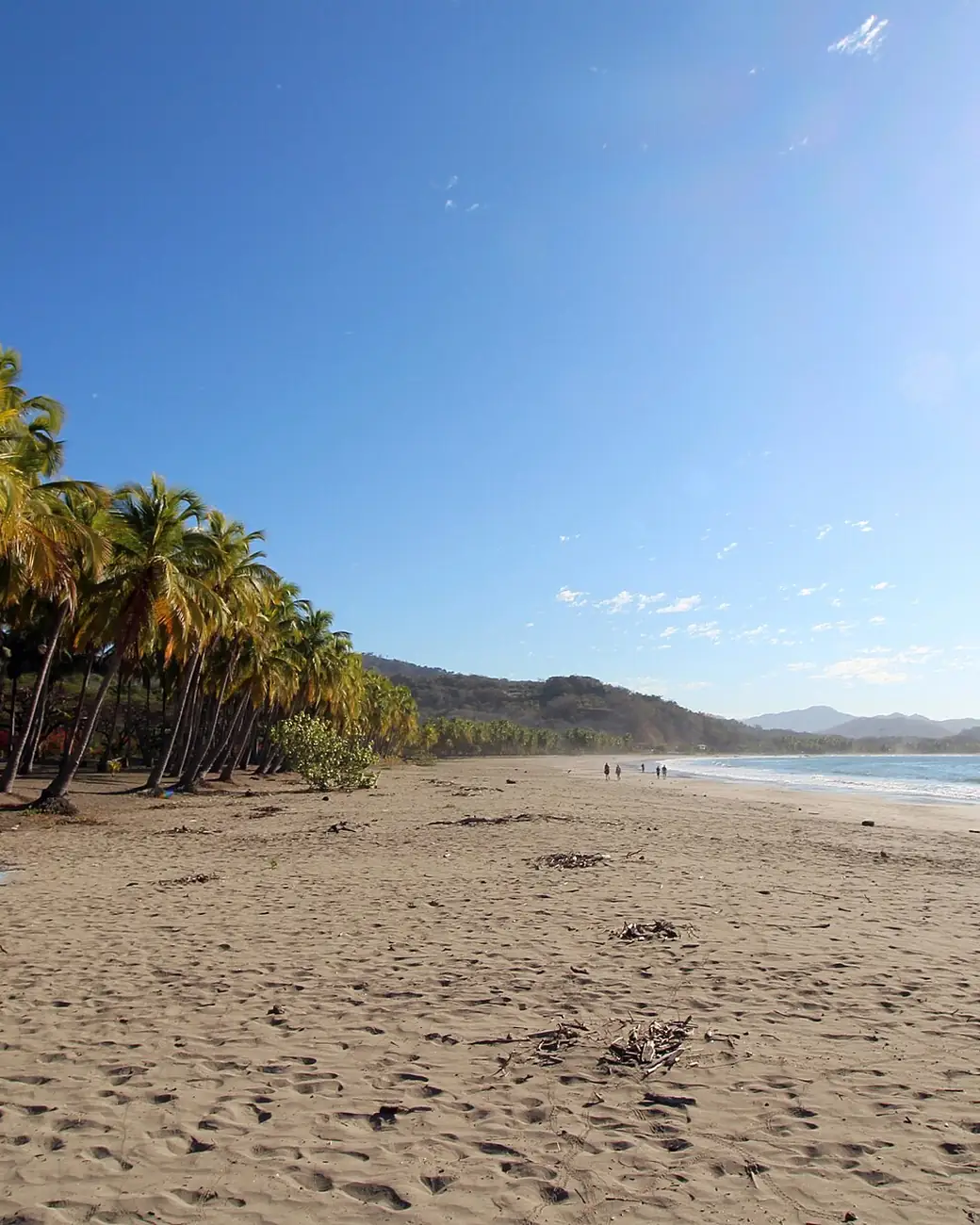
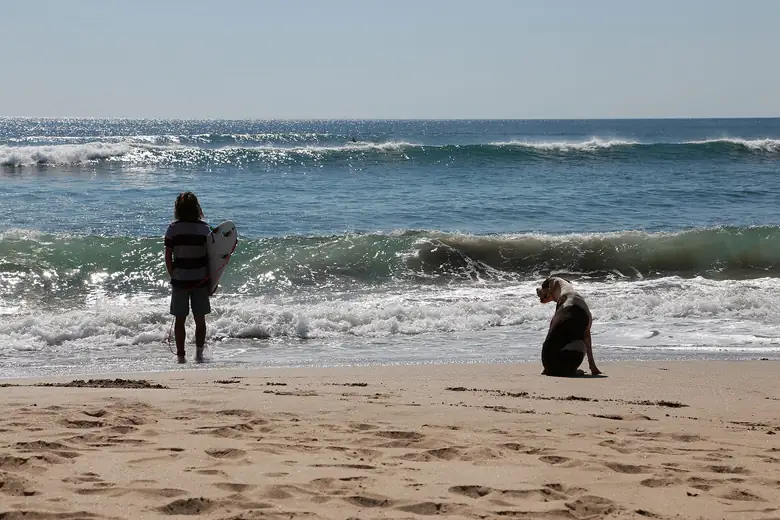
After so much jungle, the trip deserves an epilogue of salt and sun — and Guanacaste is the country's sunniest coastline: a string of bays and beaches from golden to white, home to Costa Rica's great resorts, many on near-private peninsulas overlooking the Gulf of Papagayo.

It is the chapter for slowing down without standing still: sailing at sunset, snorkelling in quiet coves, learning to surf in warm water, riding horses on the beach. And there is a detail that says a lot: just to the south lies the Nicoya Peninsula, one of the world's five Blue Zones — where people live longer, and slower. Pura vida, certified by science.

  • Sun almost guaranteed: the driest coast in the country
  • 1 of the planet's five Blue Zones, right next door
  • Fly straight home: an international airport in the region
Veleiro navegando ao pôr do sol na costa do Pacífico da Costa Rica
Adults only

Sunset under sail

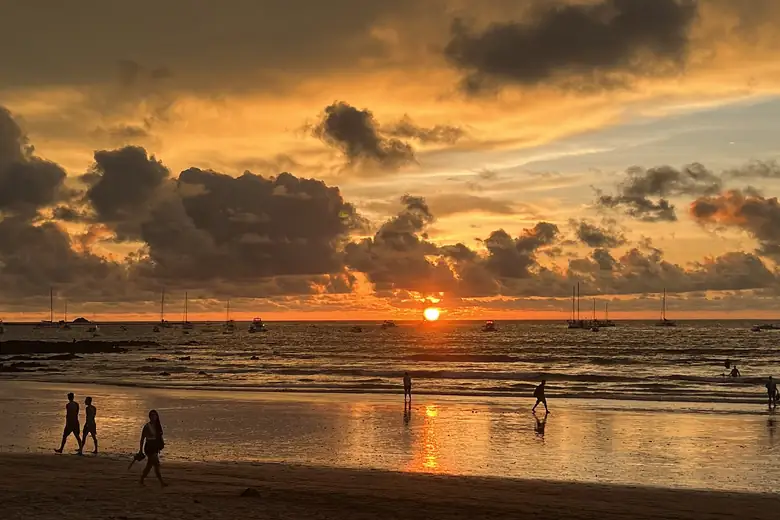
A private catamaran glides down the coast in the late afternoon: a swim in a deserted cove, canapés and sparkling wine on deck — and Guanacaste's famous sunset setting the Pacific on fire. The most beautiful way to close any day of the trip.

Surfista deslizando numa onda de águas mornas no Pacífico costarriquenho
With children

The surf lesson

Warm water all year round, long, forgiving waves and patient instructors have made this one of the best places on Earth to learn to surf. In a single morning, everyone in the family gets to their feet — and gets the photo to prove it.

Paisagem vulcânica do Rincón de la Vieja em Guanacaste
For everyone

Rincón de la Vieja

An hour from the beaches, another volcano presides over a park of fumaroles, bubbling mud pots and turquoise waterfalls. A reminder that even in the beach chapter, Costa Rica never stops being a country alive underneath.

Day by day

How the trip takes shape

A skeleton itinerary along the classic route, to give you a sense of scale — every day can be swapped, stretched or cut. Length, pace and experiences are always adjusted to you.

Day 1

Welcome to pura vida

Arrival in San José and a night in the Central Valley to land softly — or, if flights allow, a transfer straight into the countryside. The first "pura vida" comes at the airport; the rest never stop.

ArrivalCentral Valley
Day 2

Towards the volcano

A scenic drive to the Arenal region, past coffee farms and canyon rivers. Check-in with the volcano's cone in the window and, at night, the debut at the hot springs: warm water, starry sky, and the trip officially begun.

ArenalHot springs
Day 3

The canopy & the waterfall

A morning on the hanging bridges with a naturalist guide — toucans, sloths and the canopy seen from within. In the afternoon, La Fortuna waterfall and an emerald swim; at night, the hot springs again. Nobody complains about the repetition.

Hanging bridgesWaterfall
Day 4

The crossing into the clouds

The most beautiful crossing in the country: a boat across Lake Arenal with the volcano at your back, then the climb into the Monteverde highlands. The temperature drops, the mist arrives and the scenery changes films — the evening calls for a fireplace and a long dinner.

Lake ArenalMonteverde
Day 5

The cloud forest

At dawn, the search for the quetzal with a specialist guide. Then the Monteverde reserve from the inside — mosses, orchids, hummingbirds — and, in the afternoon, the canopy tour: zip lines crossing the valleys at cloud height.

QuetzalCanopy tour
Day 6

The descent to the sea

From mist to coastal warmth in a few hours on the road. A strategic stop at the Tárcoles river — giant crocodiles and, with luck, macaws crossing the sky — and arrival in Manuel Antonio in time for your first Pacific sunset.

The coastSunset
Day 7

The safari & the beach

A morning in the park with guide and scope: sloths, monkeys, coatis, iguanas — the Costa Rican safari at full strength. In the afternoon, the reward: the beach inside the park, or the hotel pool suspended between jungle and sea.

Manuel AntonioBeach
Day 8

The golden epilogue

Up the coast to Guanacaste — or a hop in a small plane, with the whole coastline in the window. Days of resort and sea: a sunset catamaran, a surf lesson, a beach ride on horseback, or simply nothing, done properly.

GuanacasteResort
Day 9

Until next time, pura vida

An unhurried breakfast and the flight home from the region's own international airport — no need to return to San José. The suitcase comes back lighter than it looks: half of what it carries is the urge to return.

ReturnFlight home
This itinerary is a starting point, not a package. Some swap Guanacaste for more jungle in Corcovado, some add the canals of Tortuguero, some prefer two bases instead of four. The final design — chapters, bases, number of nights — is always drawn up together, and without haste.

Gallery

What you will see

Click any image to enlarge.

How we travel

What changes when the trip is designed

Costa Rica looks simple on the map — and that is deceptive: slow roads, microclimates, reserves that require timed entry and guides who make all the difference. All of it is settled before you board.

The route in the right order

Arriving through San José and leaving through Guanacaste — or the reverse — avoids retracing roads and ends the trip on the beach, not in traffic. It sounds like a detail; it is the design that separates a good trip from a flawless one.

Guides who see the invisible

The forest gives nothing away to the naked eye. The right naturalist guides — biologists with a scope and a trained ear — turn a silent trail into a live documentary. We book the best in each region, privately.

Distances without the suffering

A hundred kilometres in Costa Rica can take three hours. We combine private drivers, scenic boat crossings and short domestic flights so the trip's time goes into the experiences — not the road.

Eco-luxury, for real

We select lodges where sustainability is not a slogan: architecture that opens onto the forest, farm-to-table kitchens, private reserves with trails for guests only. Absolute comfort, with the jungle in the front row.

Made for every age

Few destinations give a family this much: canopy tours, surf, wildlife everywhere — every activity has a version for every age and every level of courage. And for couples, the same country becomes a hideaway: private hot springs, dinners in the jungle, beaches almost your own.

24/7 support

From boarding in Brazil to the return, a team follows the entire trip. Any surprise — a flight, a tropical downpour, a special request at the lodge — is solved with a message, in your language.

Where to stay

Three ways to sleep in the jungle

We work with a short list of houses we know and trust — organised here by style, which in Costa Rica sets the tone of each chapter. The final choice is always designed with you, occasion by occasion.

The classic

Lodges with a volcano in the window

In the Arenal region, the right room wakes up facing the volcano's cone — with hot springs in the gardens, private trails and breakfast with toucans in the audience. It is the style that opens the trip and sets the tone for everything after.

  • Arenal · La FortunaHot springs & cone views
  • Monteverde · the highlandsCloud-forest hideaways
The original

Eco-luxury above the Pacific

Villas and suites hanging from the coastal hillsides, where the infinity pool merges into the treetops and the sea appears through the jungle. Signature architecture, farm-to-table kitchens — and monkeys passing through at dusk.

  • Manuel Antonio & UvitaVillas between jungle and sea
  • Osa PeninsulaRemote expedition lodges
The grand finale

Resorts of the gold coast

Guanacaste and the Gulf of Papagayo hold the country's great resorts — top international brands on secluded peninsulas, with calm beaches, spas, golf and full infrastructure for families. The epilogue, set to rest mode.

  • Gulf of PapagayoGreat brands on private peninsulas
  • Guanacaste beachesBeach clubs & seaside boutiques

Know before

The essentials, no fine print

Practical information for those starting to think about the trip.

When to go

Costa Rica works all year round — what changes is the wardrobe. The dry season runs from December to April; the rest of the year is the "green season", with clear mornings and late-afternoon rain:

Dec–AprThe dry season: steady sun, easy roads and the Pacific coast at its best. High season — book well ahead.
May–AugThe forest at maximum green, waterfalls at full flow and fewer people. July often brings the "veranillo", a sunny truce in the middle of the holidays.
Sep–NovThe Pacific at the height of the rains — and, in a delicious contradiction, the best season on the Caribbean coast, which follows its own calendar.
All year roundWildlife has no low season: sloths, monkeys and toucans show up in any month. Every season has its bonus — from whales to nesting turtles.

Documents and vaccination

Brazilian citizens do not need a visa for tourism in Costa Rica — a valid passport and an onward ticket are enough. The requirement that catches many by surprise: travellers arriving from Brazil must present an international yellow fever vaccination certificate, taken at least ten days before departure.

We check the requirements in force at the time of your trip and send the complete checklist — documents, insurance and anything else needed — well in advance.

Packing right

The country runs on microclimates: humid heat in the jungle, cool evenings at Monteverde's altitude, strong sun on the coast. The formula: light quick-dry clothing, one proper warm layer for the highlands, shoes with grip, a compact rain shell and serious sunscreen.

Two items worth their weight in gold: binoculars — wildlife rarely poses up close — and a waterproof pouch for your phone. We send the full list, chapter by chapter, before departure.

Nature is in charge

No serious trip promises the quetzal, the macaw or the whale — wildlife is nature, not a catalogue. What exists is probability, and it is built: the right reserve, the right hour of the day and, above all, the right guide at your side.

This is how we design it: dawns for the birds, tides for the beaches, seasons for each animal — and local guides who know where the forest is happening that day. The vast majority of our travellers come home with the photo — and with the story.

To add on

To make the trip even more yours

Extra chapters that fit naturally into the classic route.

01

Tortuguero, the Caribbean Amazon

A labyrinth of navigable canals where the jungle is explored by boat — caimans, river otters, birds by the dozen — and, in season, green turtles nesting on the beach at night. No roads: you arrive by boat or small plane, and that is exactly what keeps it pristine.

02

Corcovado, the jungle at full dose

On the remote Osa Peninsula, the country's wildest park concentrates Costa Rica at its most intense: tapirs, macaws in flocks, four monkey species and expedition lodges reached by boat. For those who want nature without an audience.

03

Río Celeste, the improbable blue

On Tenorio volcano, two rivers meet and a mineral reaction paints the water a sky blue that looks edited. The trail to the waterfall is one of the most beautiful walks in the country — and delivers the photo nobody believes is real.

04

Nicoya, the peninsula of longevity

One of the planet's five Blue Zones has also become the country's wellness retreat: charming surf villages, yoga retreats, farm-to-table food and a rhythm that explains why people there live so long. Pura vida, spa edition.

05

The Caribbean on the other side

On its Caribbean side, Costa Rica changes accent: Afro-Caribbean culture, coconut-milk cooking, postcard beaches and Cahuita national park with its reefs. An entirely different country, a few hours from the other one.

06

The whales, in season

Between July and October, humpbacks from the southern hemisphere travel up to the Pacific coast to give birth — including in a bay whose sandbank has, by poetic coincidence, the exact shape of a whale's tail. A bonus well worth a detour.

( Pairs well with this trip )

After pura vida, the map goes on

01

Mexican Caribbean

Cancún & the Riviera Maya: turquoise sea, cenotes and seaside Mayan ruins.

02

Peru

Machu Picchu and the Sacred Valley — the great Andean journey to pair with pura vida.

03

Brazil

The Amazon, the Pantanal, Iguassu and the beaches — nature on a continental scale.