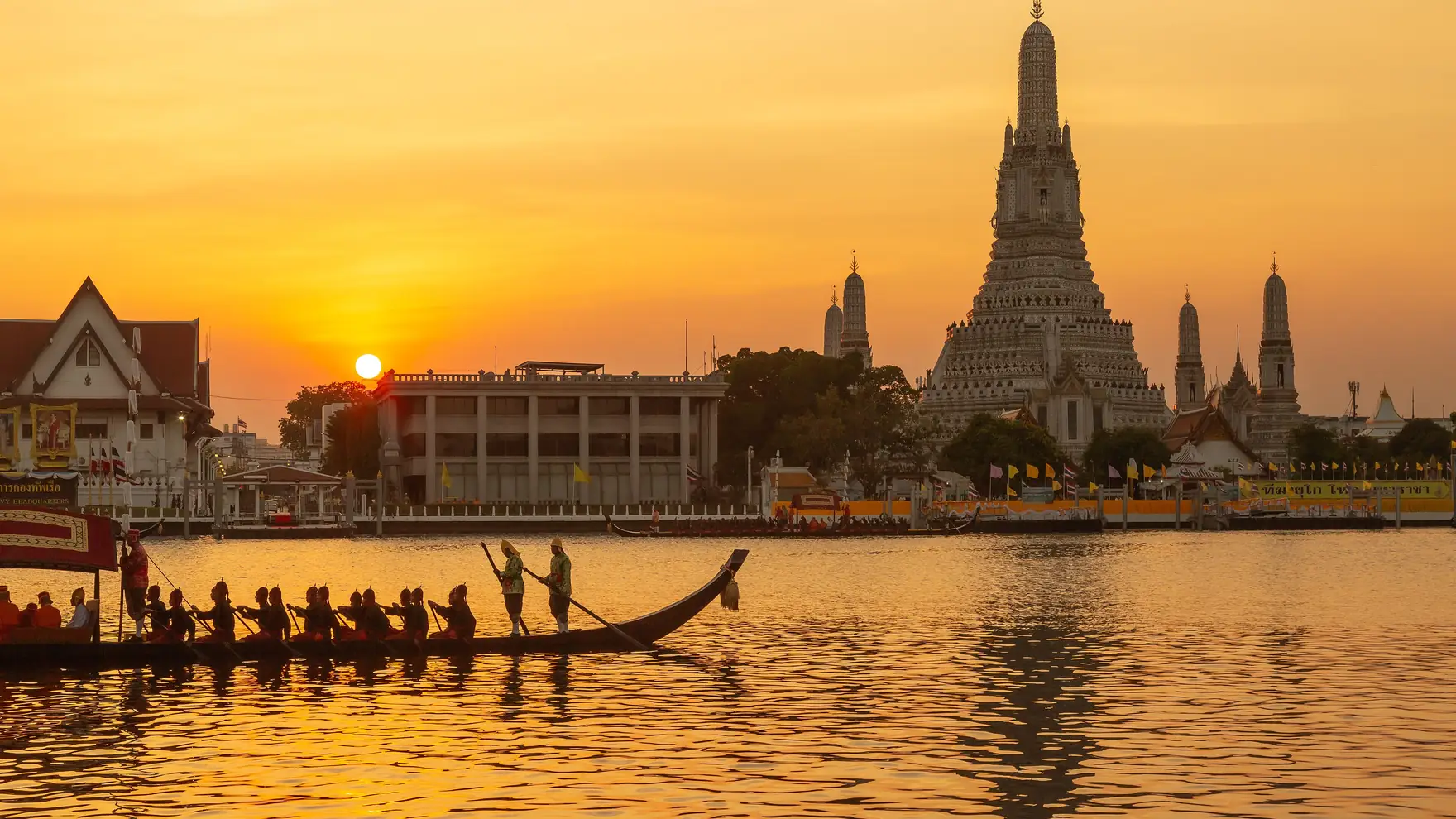
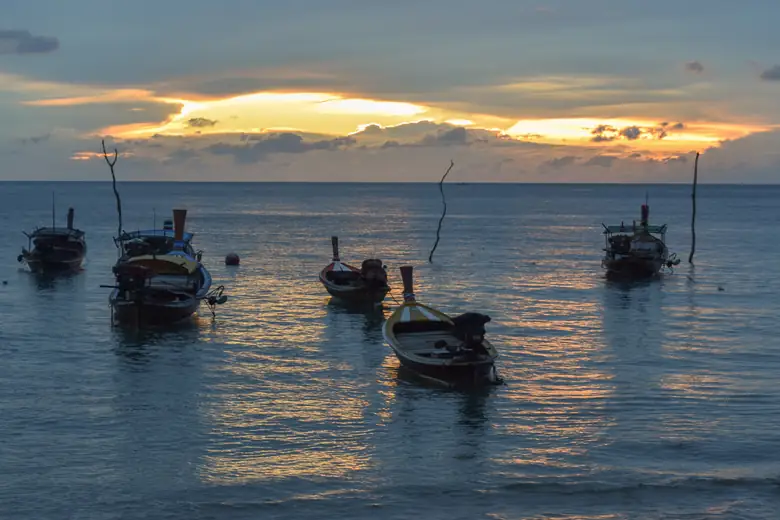
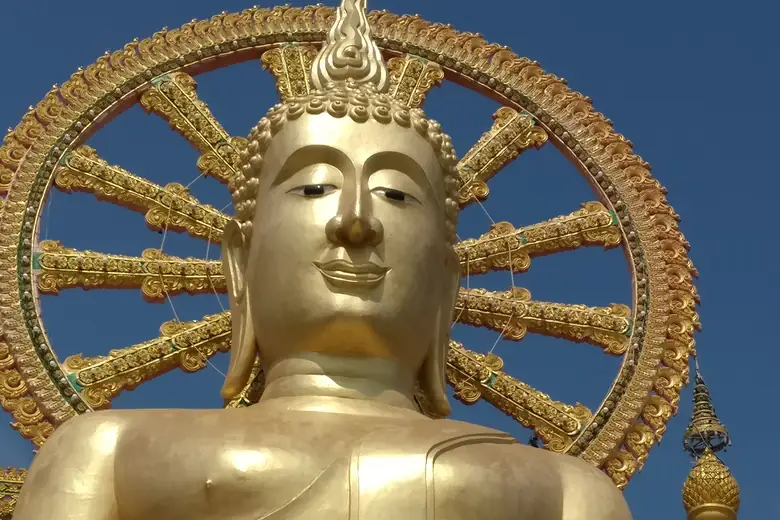
Torres do templo Wat Arun douradas pelo pôr do sol à beira do rio Chao Phraya, em Bangkok

Thailand · The Land of Smiles

Gold, jungle
and two seas

Few countries hold this many journeys inside a single one: mornings of gilded temples and markets afloat, afternoons of mountains and elephants up north, and a happy ending among limestone islands rising from turquoise water. Thailand welcomes like nowhere else on earth — and every chapter is designed at your own pace.

0colonizations — the only country in Southeast Asia never to be colonized
40,000+Buddhist temples, from Bangkok's gold to the monasteries of the mountains
2seas — Andaman and Gulf, on alternating seasons: one coast is always at its best
100%tailor made — route, pace, hotels and experiences designed around you

The destination

A kingdom that never
bowed

While the world around it was being carved up by empires, old Siam remained its own master — and you can feel it to this day. Thailand does not perform its culture for visitors: it simply lives it, from monks collecting alms at dawn to markets that perfume the night with lemongrass and charcoal.

The classic journey moves down the country like a score: Bangkok, the capital that runs on its river, between gilded palaces and the most decorated street food on the planet; then the Chiang Mai north, where the old kingdom of Lanna lives on in mountain monasteries, rice valleys and elephant sanctuaries; and, to finish, the sea — hand-picked between two coasts that could not be less alike.

It is also one of the world's most generous destinations for luxury: legendary hotels on the Chao Phraya, pool villas hanging over bays, the spas that taught the rest of the planet — at prices that surprise anyone used to Europe or the Caribbean. All of it served with the smile that gives the country its nickname.

Gilded temples Street food to stars Ethical elephants Islands & private boats Spas & wellness Honeymoons & families

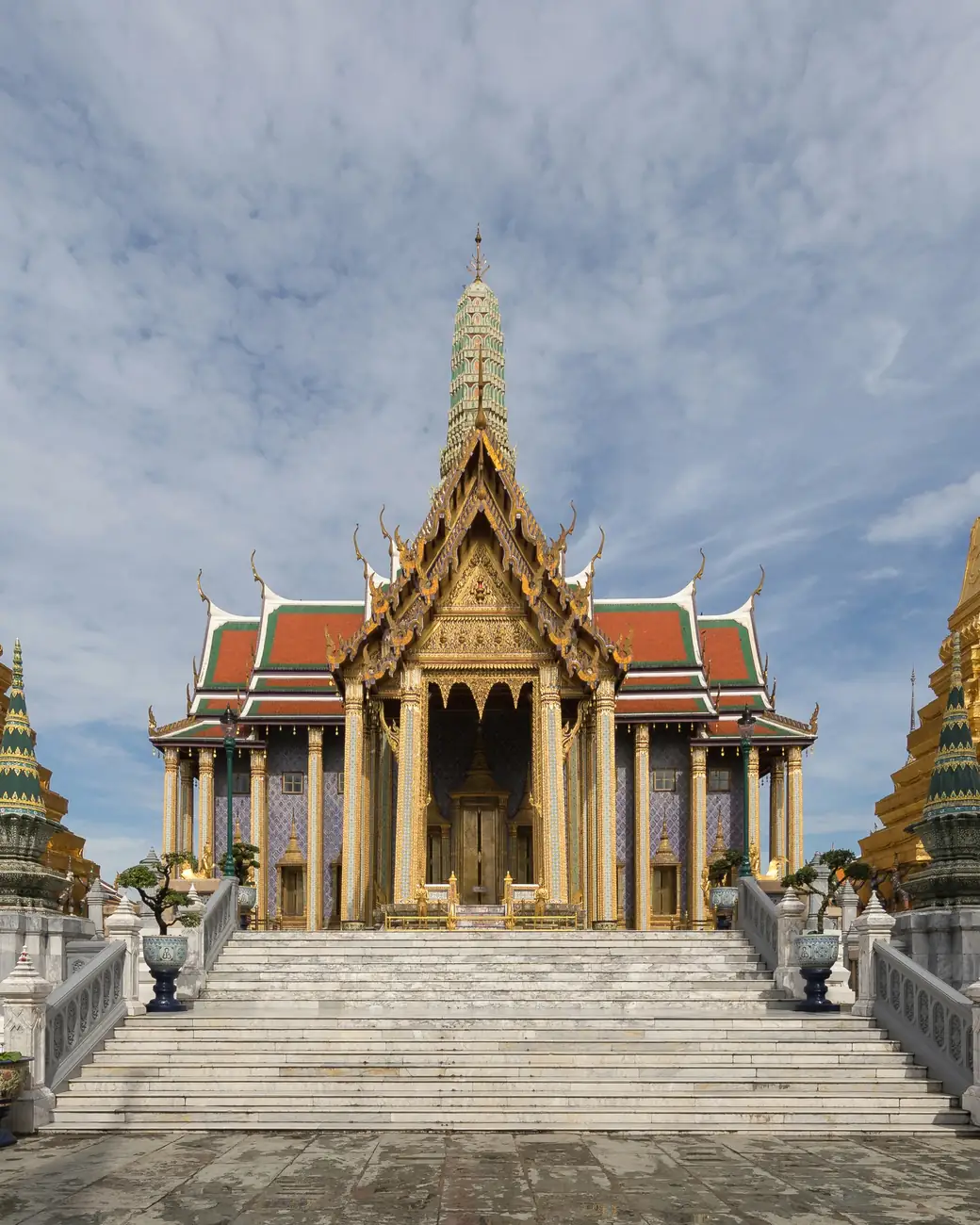
Grande Palácio de Bangkok com telhados dourados e torres ornamentadas Bangkok · The capital of the senses

First chapter

The city that runs on its river

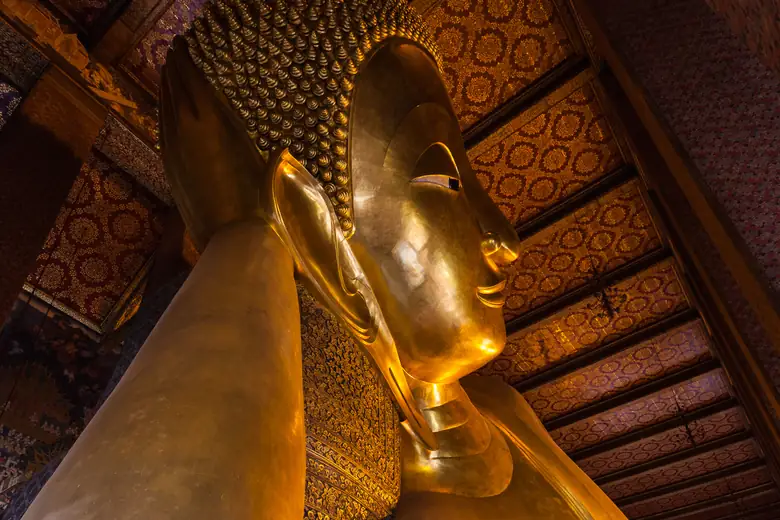
Bangkok makes most sense from the water: the capital was born of the Chao Phraya, and it is from the river that its icons appear in the right order — the Grand Palace gleaming since 1782, the Emerald Buddha in its sanctuary, Wat Pho's Reclining Buddha stretching 46 gold-leafed meters and, on the far bank, Wat Arun, the Temple of Dawn, which the sunset lights up like a porcelain beacon.

And then the city becomes another one entirely: glass rooftops above an ocean of lights, serious cocktails, dinners that run from award-winning street stalls to starred dining rooms — Bangkok is now one of the great food capitals of the world. In between, riverside hotels that rank among Asia's most storied, with their own boats standing in for taxis.

  • 1782 — the year the Grand Palace founded the present capital
  • 46 m — Wat Pho's Reclining Buddha, covered in gold
  • 168 letters in the city's ceremonial name — the longest on earth
Buda Reclinado dourado do templo Wat Pho, em Bangkok
For everyone

The gilded temples

The Grand Palace and Wat Pho early in the morning, ahead of the heat and the crowds, with a guide who tells you what the walls do not — and Wat Arun at the end of the day, when the low light sets the porcelain tower ablaze. The right order changes everything: we design it.

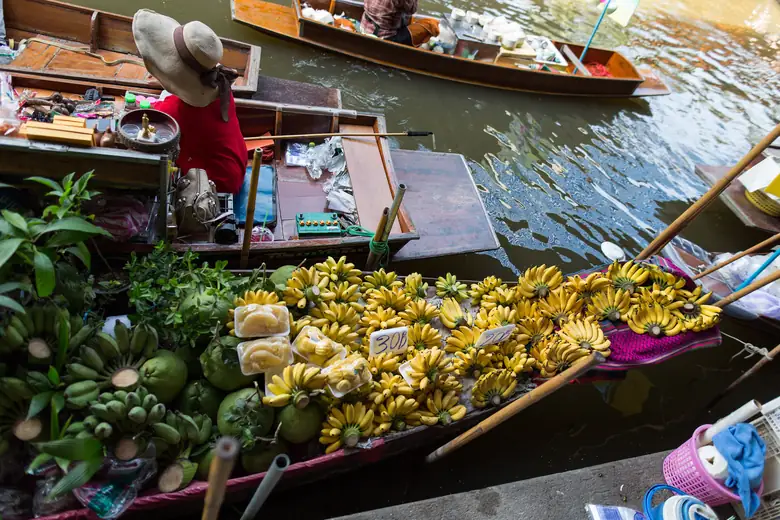
Barcos tradicionais em mercado flutuante na Tailândia
With children

The river, the klongs & the markets

A private teak boat runs down the Chao Phraya and slips into the klongs — the canals where Bangkok still lives on stilts. At the floating markets, mango sticky rice passes from boat to boat: it is the morning the children (and the adults) never forget.

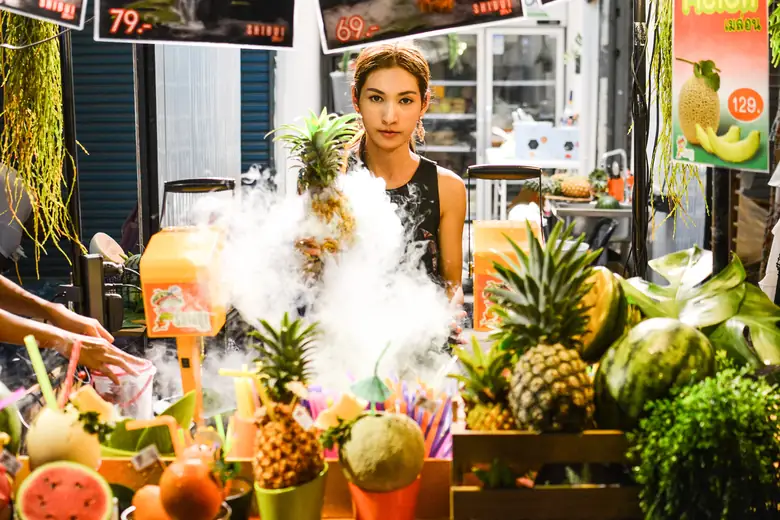
Cozinheiro preparando comida de rua tailandesa no wok em meio ao vapor
Adults only

The night, from above and from below

It starts on a rooftop with the whole city lit at your feet, then moves on to a starred dinner or to the best street food on the planet, guided by someone who knows every wok in Chinatown. Bangkok after dark is a destination in itself — and deserves an itinerary of its own.

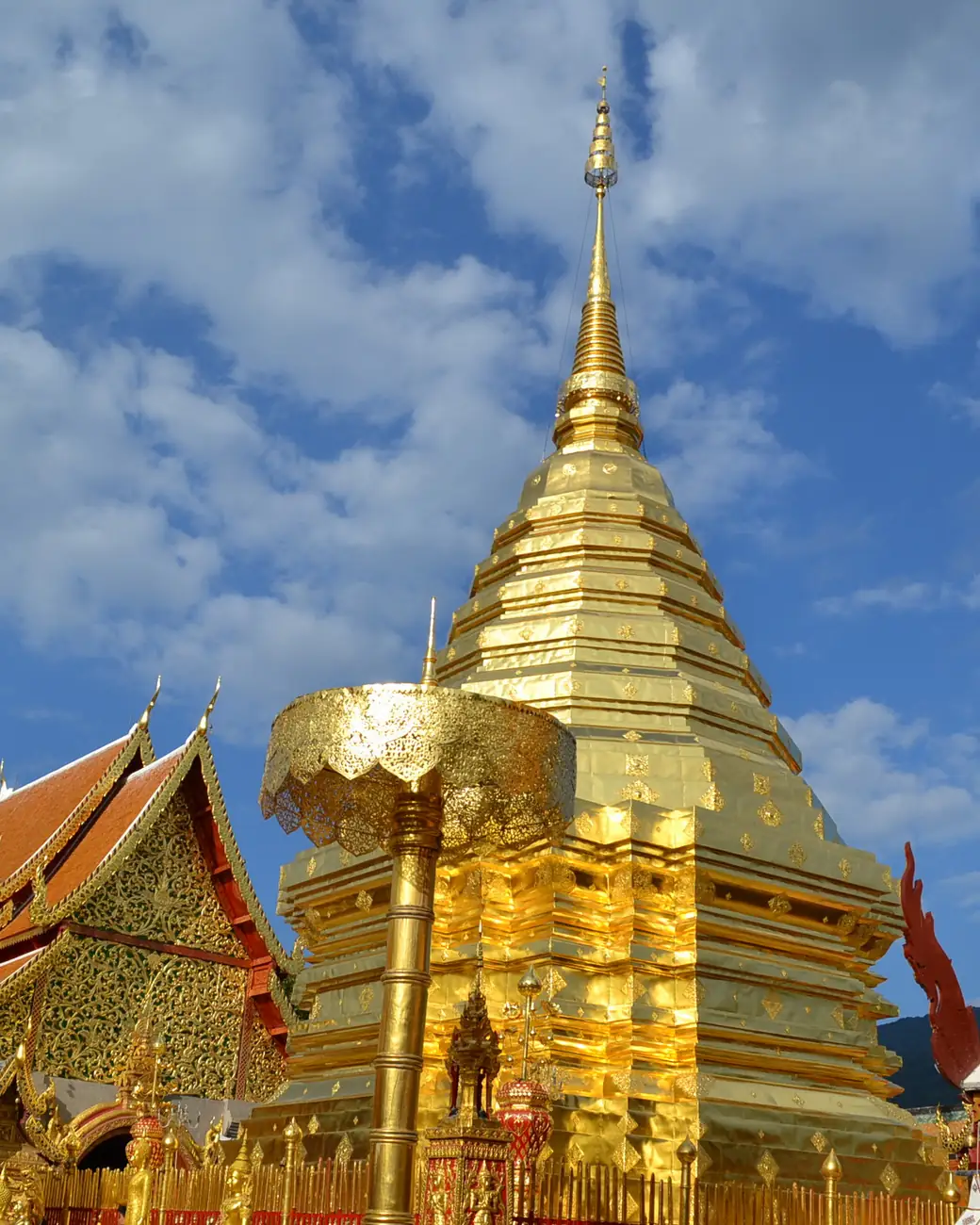
Chedi dourado do templo Doi Suthep, nas montanhas de Chiang Mai Chiang Mai & the North · Thailand of the mountains

Second chapter

The old kingdom in the mountains

Seven hundred kilometers north, the air changes: Chiang Mai was the capital of the kingdom of Lanna, and its old city — still ringed by wall and moat — keeps more than three hundred temples where monastic life carries on as it has for seven centuries. High on the mountain, up a 306-step staircase guarded by naga serpents, the golden chedi of Doi Suthep watches over the whole valley.

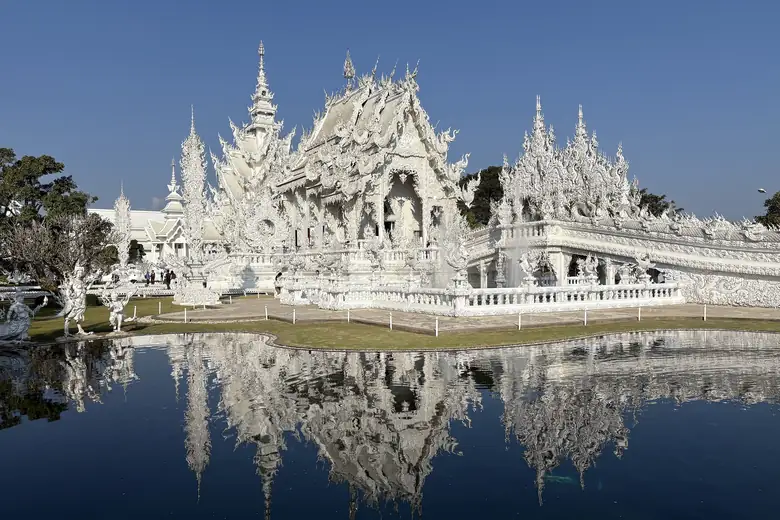
The north is Thailand in slow motion: rice valleys, farm cafés, silk and celadon workshops, sanctuaries where working elephants get to retire — and, on the road to Chiang Rai, the surreal White Temple, a mirage of plaster and mirrored glass in open country. In November the Yi Peng festival fills the sky with thousands of lanterns: quite possibly the most beautiful night on Asia's calendar.

  • 1296 — the founding of Chiang Mai, capital of the Lanna kingdom
  • 306 naga-lined steps up to the gold of Doi Suthep
  • Thousands of lanterns in the sky at Yi Peng, in November
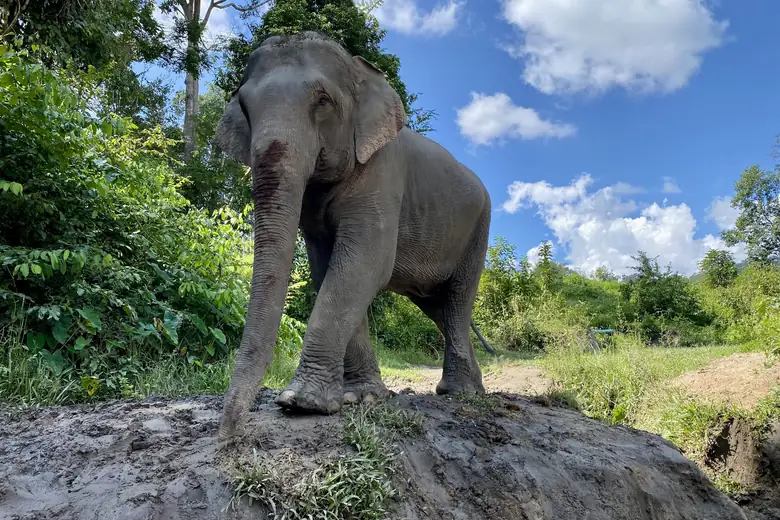
Elefantes asiáticos caminhando em santuário no norte da Tailândia
With children

Elephants, done right

We work only with genuine sanctuaries, where there is no riding and no show: you walk beside the elephants, prepare their sugarcane-and-watermelon snacks, watch the river bath. A whole morning eye to eye with the kingdom's national animal.

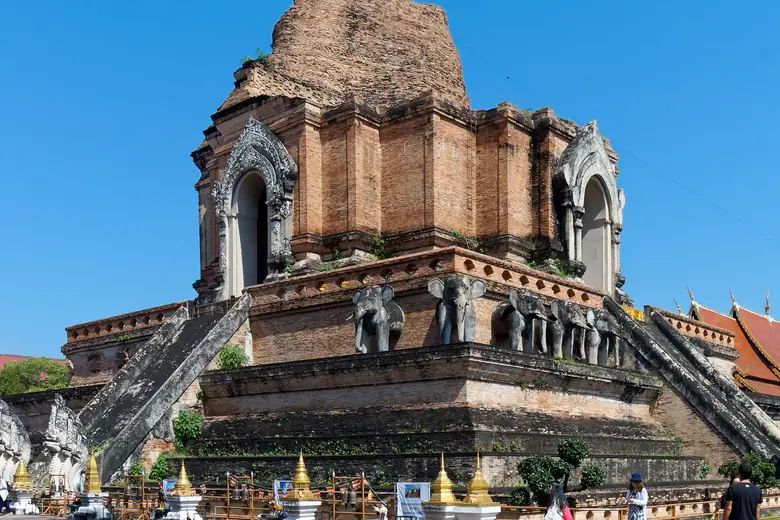
Templo antigo da cidade velha de Chiang Mai ao entardecer
For everyone

Doi Suthep & the temples of Lanna

The climb up the sacred mountain early in the morning, while the bells still have the sky to themselves — then, back in the old city, the ruined chedi of Wat Chedi Luang and a conversation with the monks who study there. The spiritual north, unhurried and queue-free.

Templo Branco de Chiang Rai refletido, com sua ornamentação em gesso e espelhos
For everyone

The White Temple of Chiang Rai

The work of a contemporary Thai artist, Wat Rong Khun is a temple entirely in white, encrusted with mirrors — somewhere between the sacred and the surreal. On the same route, the Mekong and the Golden Triangle, where three countries meet on the river.

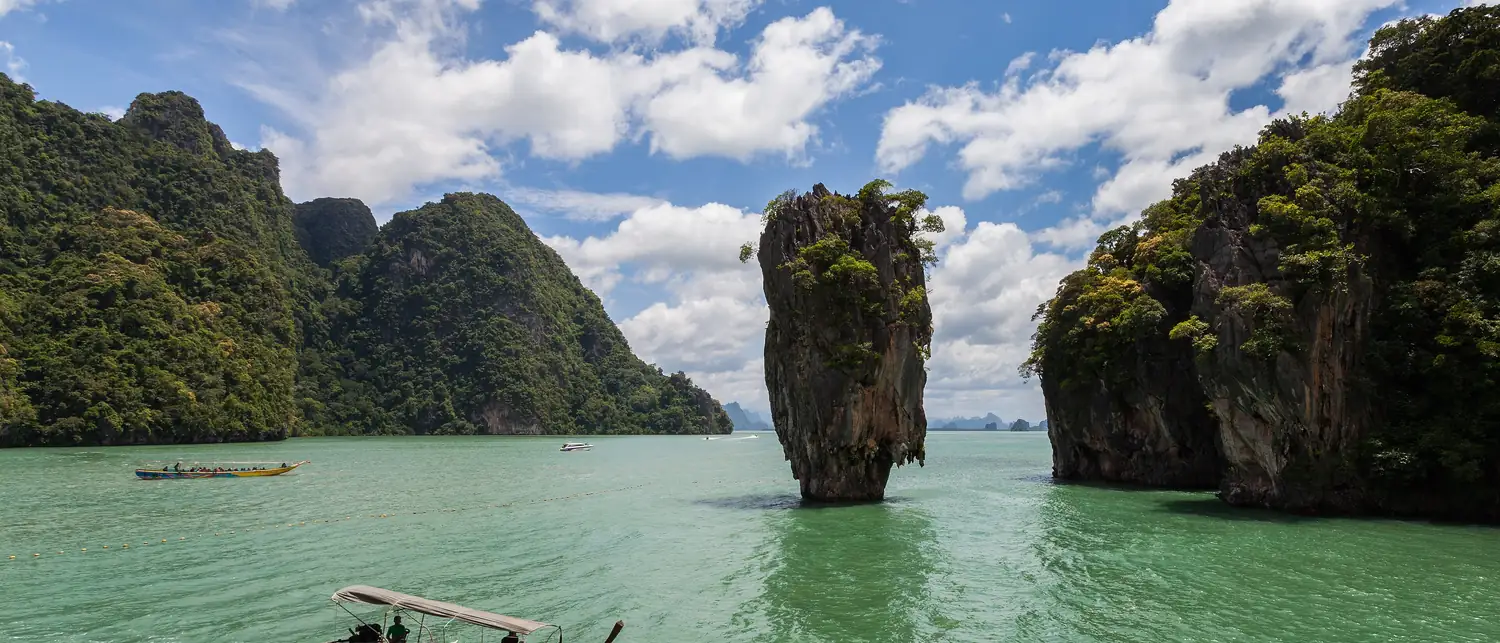
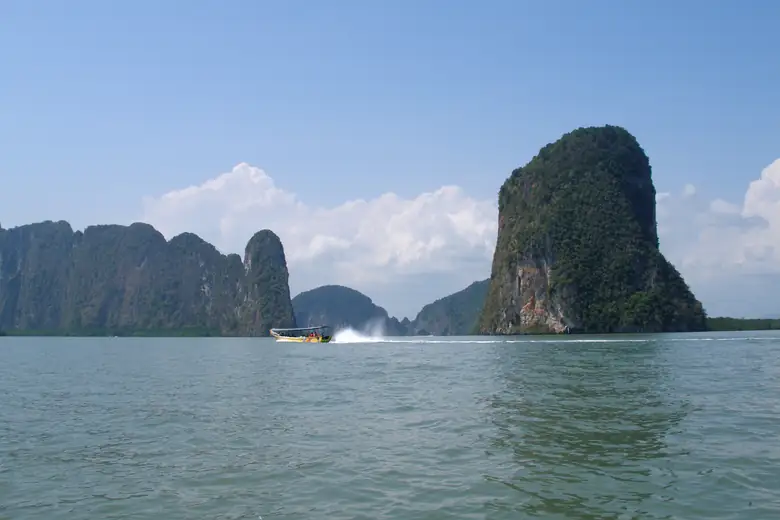
Torres de calcário da Baía de Phang Nga erguendo-se do mar verde-esmeralda

At dusk the river turns to gold before Wat Arun; a monk lights incense and the whole city seems to lower its voice. That is the minute you understand why nobody visits Thailand only once.

From Bangkok to both seas, everything designed tailor made
Barco long-tail ancorado em praia de areia clara com falésias de calcário ao fundo, no mar de Andamão Andaman Sea · Phuket, Phang Nga & Krabi

Third chapter

Limestone towers in the sea

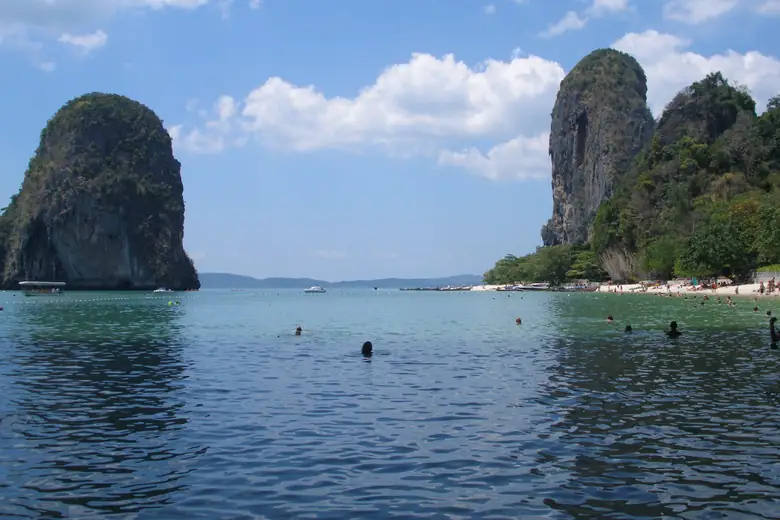
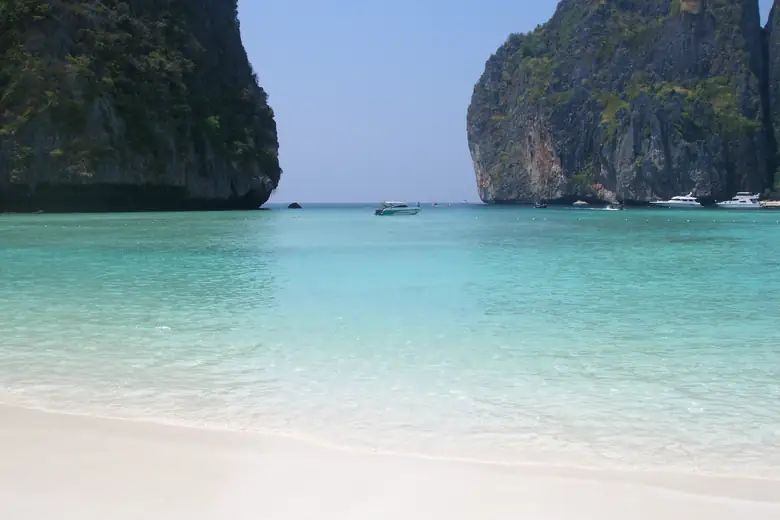
The west coast is postcard Thailand: in Phang Nga Bay, dozens of limestone towers rise sheer from a jade-green sea, draped in jungle, hiding secret lagoons — the hongs — that can only be reached by canoe, through tunnels in the rock. Phuket, the country's largest island, is the gateway and the most comfortable base, with resorts draped over entire bays.

Next door, Krabi keeps the coast's crown jewel: Railay, a peninsula with no roads at all, walled in by golden cliffs, reached only by boat — and, out at sea, the Phi Phi islands, best seen early, before the world wakes up. There is one right way to live all of this: a private boat, your own route, and hours that run against the crowds.

  • 42 protected limestone islands in Phang Nga Bay
  • Nov–Apr — the Andaman's dry, flat-sea season
  • 0 roads reach Railay — the only way in is by sea
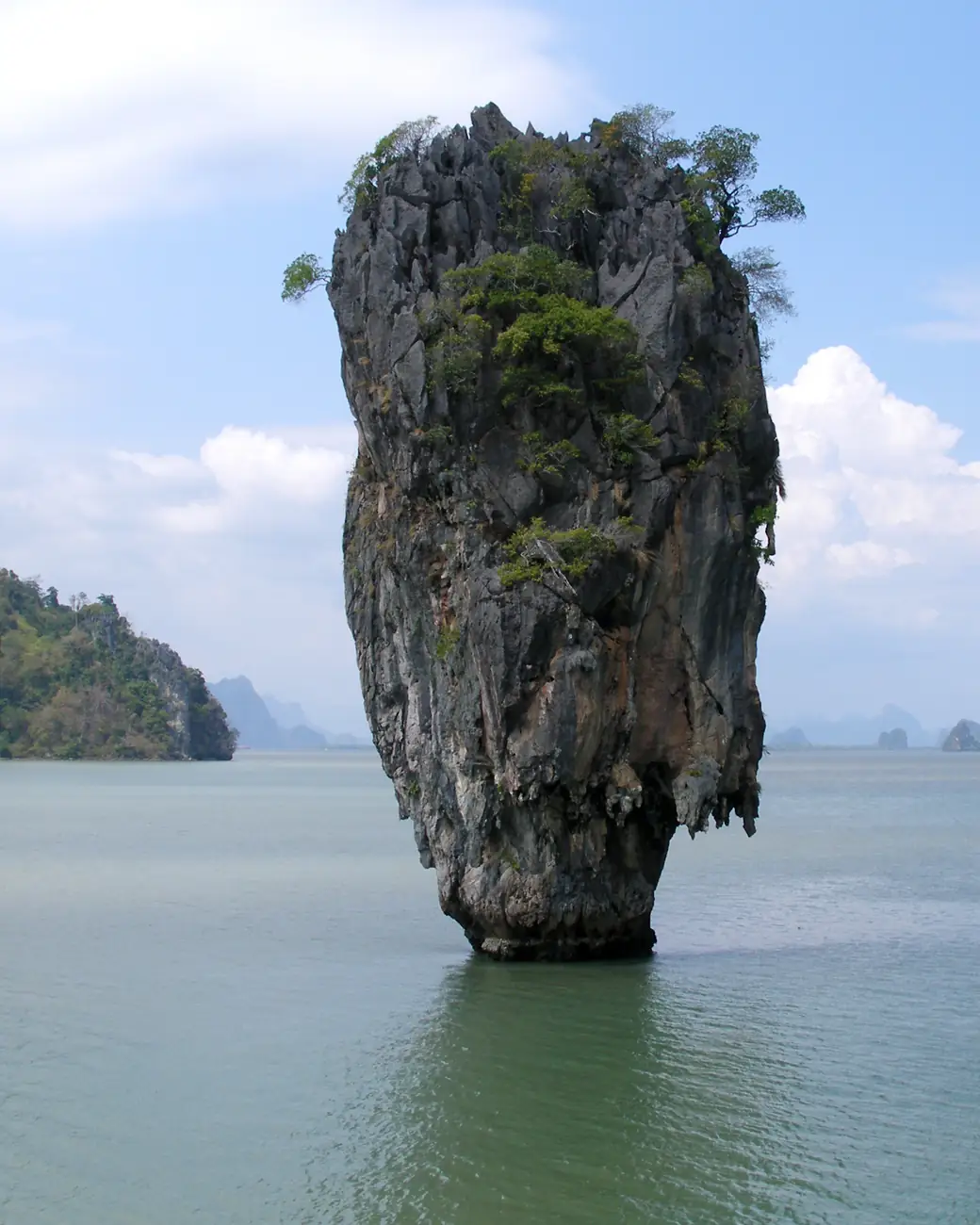
Ilha de calcário Ko Tapu, na Baía de Phang Nga, erguendo-se solitária do mar
For everyone

Phang Nga by private boat

A boat all your own among the towers of rock, with canoes on board to slip through the caves into the lagoons hidden at the heart of the islands. Lunch in a stilt-borne fishing village, and the iconic Ko Tapu — the "James Bond island" — with nobody else in the picture.

Falésias de calcário emoldurando a praia de Railay, em Krabi
Adults only

Railay & the cliffs of Krabi

The peninsula the sea cut off became a refuge with a rhythm of its own: mornings of kayaking under golden walls, afternoons on the sand at Phra Nang, the sunset watched from the water, glass in hand. Krabi is the Andaman at its most contemplative — and it wins you over at first sight.

Baía de águas turquesa cercada por falésias nas ilhas Phi Phi
With children

A whole day of islands

Leaving early makes all the difference: the bays of Phi Phi still silent, snorkeling in aquarium water, beaches where the boat noses in and the family steps straight onto the sand. By the time the tour boats arrive in the afternoon, you are already heading back to the villa pool.

Coqueiros inclinados sobre praia de areia branca em Koh Samui, no Golfo da Tailândia Gulf of Thailand · Samui & its neighbors

Fourth chapter

The gentle side of paradise

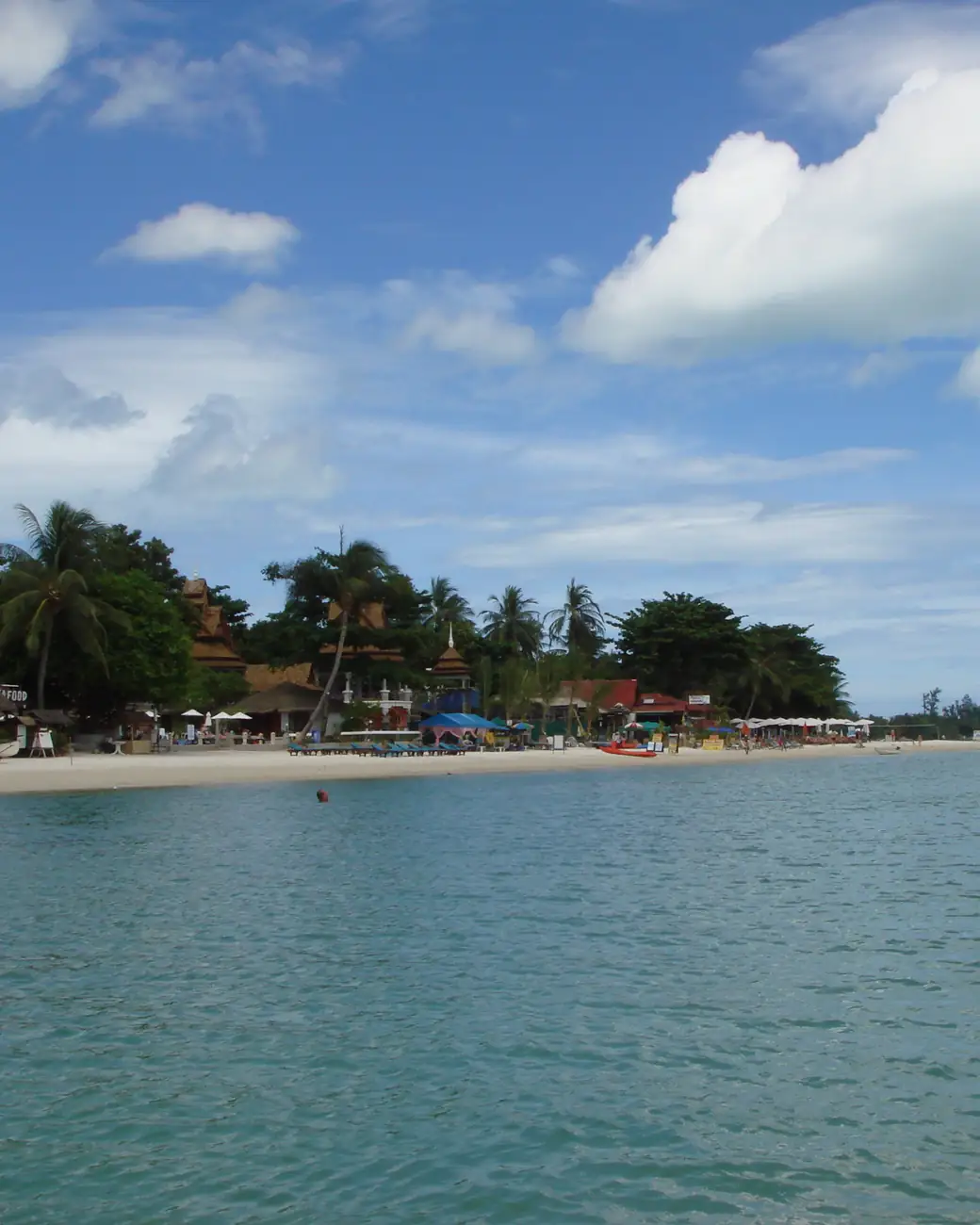
Across the isthmus, the Gulf has another temperament: softer, sweeter, with a sunshine calendar that mirrors the Andaman's in reverse. Koh Samui, the island of coconut groves, has become one of the wellness capitals of the world — pool villas facing the sea, destination spas, and the 12-meter Big Buddha turning gold in the sun as you arrive.

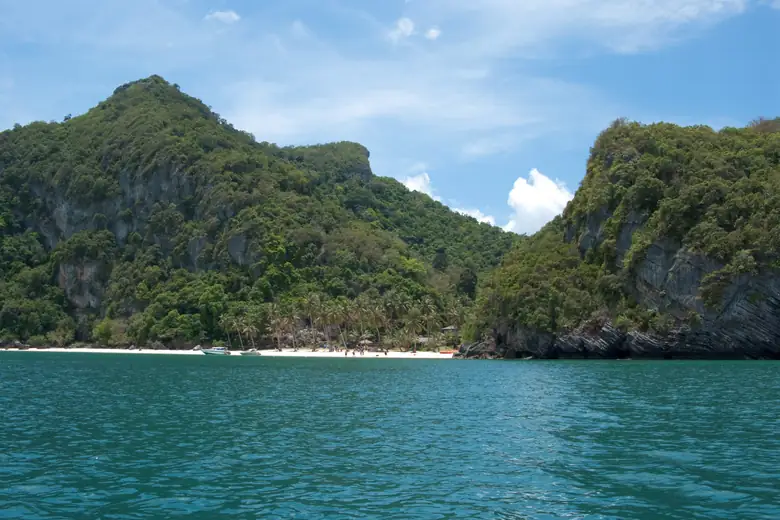
A boat ride away, the Ang Thong marine park scatters 42 green islands across a jade sea, with an emerald lagoon hidden high inside one of them. Koh Phangan, beyond its famous parties, keeps coastlines of silence and yoga retreats; Koh Tao is a warm-water baptism for divers. This is the resting chapter — at the exact midpoint between remote and comfortable.

  • 42 islands in the Ang Thong marine park
  • 12 m — the golden Big Buddha greeting arrivals to Samui
  • Jan–Sep — when the Gulf shines and covers the Andaman monsoon
Vista do alto das ilhas verdes do parque marinho de Ang Thong sobre o mar
For everyone

Ang Thong by private boat

A day by sailboat or speedboat through the protected archipelago: kayaking between islets, a lookout over a sea sprinkled with green hills, and the climb to the Emerald Lagoon — a perfect green pool set deep inside an island. The Gulf's signature day out.

Pôr do sol dourado sobre o mar calmo do Golfo da Tailândia
Adults only

The spa as a destination

Samui gathers some of the most respected wellness sanctuaries in Asia: Thai massage at the source, multi-day programs, treatment pavilions open to the sea. For honeymoons — or for anyone who wants to come home better than they left.

Estátua dourada do Grande Buda de Koh Samui contra o céu azul
With children

The island of coconut groves

Gently shelving beaches, waterfalls in the jungle interior, the golden Big Buddha, the fishermen's village with its late-afternoon market. Samui is the island where the whole family finds its own pace — from breakfast to cinema on the sand.

Day by day

How the journey takes shape

A skeleton itinerary through Thailand, to give you a sense of proportion — every day can be swapped, stretched or cut, and the final beach can be on either of the two seas. Length, pace and experiences are always adjusted to you.

Day 1

Arriving by the river

Met at the airport and transferred to a hotel on the Chao Phraya — by boat, whenever possible. A late afternoon to shake off the time zone and, at night, the first great reveal: all of Bangkok lit up, seen from a rooftop.

ArrivalChao Phraya River
Day 2

Golden Bangkok

The Grand Palace and Wat Pho early, with a private guide and ahead of the crowds. A refined Thai lunch, an afternoon by boat through the klongs, and Wat Arun in the day's last light. At night, a starred dinner — or the best street stall in town.

TemplesPrivate boat
Day 3

Living Bangkok

A floating-market morning — or a cooking class that begins by choosing herbs at the stall. A free afternoon for the hotel spa or the galleries and cafés of the creative districts. At night, Chinatown wok by wok, guided by someone who knows every one.

MarketsGastronomy
Day 4

North to the mountains

A short flight to Chiang Mai and check-in at a retreat set among rice paddies. A late afternoon in the old city, between walls, temples and cafés — and dinner in the northern style, with spices that exist only up here.

Chiang MaiOld city
Day 5

The morning of the elephants

The most awaited day: a whole morning at an ethical sanctuary, walking beside the elephants and watching their river bath. An afternoon in the valley — a rice farm, artisan workshops, a farm café — and a free evening at the night market.

ElephantsCountryside
Day 6

Doi Suthep & the deep north

An early climb up the sacred mountain, while the temple still belongs to the monks. Then, your choice: a day out to the White Temple and the Golden Triangle, in Chiang Rai — or a guilt-free afternoon of Lanna spa and pool.

Doi SuthepChiang Rai
Day 7

Trading mountains for sea

A flight from the mountains down to the coast — Phuket, Krabi or Samui, depending on the season and on you. Check-in at the villa with your feet already in the sand, a welcome swim, and the first sunset of the beach chapter.

Change of baseBeach
Day 8

The day of the boat

The signature outing of your chosen coast: Phang Nga and its hidden lagoons, on the Andaman — or the Ang Thong archipelago, on the Gulf. A private boat, your own route, lunch on board and hours that run against the crowds.

Private boatIslands
Day 9

The art of doing nothing

No commitments at all: the villa pool, a Thai massage in a pavilion over the water, the beach club at golden hour. At night, dinner with your feet in the sand, by torchlight — Thailand is this too, and does it better than anyone.

SpaBeach club
Day 10

Until next time, Siam

A free morning by the sea, one last swim, and the flight home, timed to your international connection. The suitcase returns with silk and spices — and the nagging certainty that once was not enough.

ReturnFlight home
This itinerary is a starting point, not a package. Some travelers stay between Bangkok and the islands, some linger in the north, some carry on to Cambodia or Vietnam. The final design — cities, seas, number of nights — is always drawn together, and never in a hurry.

Gallery

What you will see

Click any image to enlarge.

How we travel

What changes when the trip is designed

Thailand is easy to visit — and hard to visit well. The right coast in the right season, the temples at the crowd-free hour, the boat that is yours alone: that invisible engineering is what separates a good trip from an unforgettable one.

The right coast, in the right month

The two seas run on alternating monsoons — and travelers who don't know it book the wrong beach. We choose Andaman or Gulf around your calendar, not a catalog: in Thailand, one coast is always in high season.

Hours that run against the flow

The Grand Palace at opening time, Phi Phi at dawn, Wat Arun in the last light: Thailand's icons change completely with the hour. We design the day so you see them the way they look in photographs — not over a thousand heads.

Guides who open doors

Private guides who explain what the gilded walls don't say, introduce you to the monk, find the right stall in Chinatown. Thailand gains a whole new depth when someone from here walks beside you.

Boats that are yours alone

A wooden long-tail, a fast launch or a sailboat at sunset — on both coasts, the Thai sea reveals itself from a private boat: your own route, unhurried stops, and no queue for the photograph.

With children, effortlessly

Few countries welcome families this well: elephants, junior cooking classes, gentle beaches, resort kids' clubs. We calibrate pace, distances and hotels so the trip works for every age — the adults' included.

24/7 support

From departure in Brazil to your return, a team follows the entire journey. Any surprise — a flight, a tide, a special request at the resort — is solved with a single message, in your language.

Where to stay

Three ways to live in Thailand

We work with a short list of houses we know and trust — organized here by style, which in Thailand changes with every chapter of the journey. The final choice is always designed with you, occasion by occasion.

The classic

The legends on the river

In Bangkok, the great riverside hotels rank among the most storied in Asia: lounges holding a century of history, afternoon tea overlooking the boats, award-winning spas — and the river as a private avenue, house launch at the ready.

  • Chao Phraya riverside · BangkokThe grand dames of the river
  • Sukhumvit & Silom · BangkokContemporary towers
Northern retreats

Among rice paddies and mountains

Up north, the finest addresses feel like Lanna villages: teak pavilions set in rice paddies the guests help plant, villas overlooking valleys of mist — and, in the Golden Triangle, luxury camps where elephants wander in the distance.

  • Mae Rim valley · Chiang MaiVillage-resorts among the paddies
  • Golden Triangle · Chiang RaiSafari tents with elephants
Feet in the sand

Villas facing the sea

On the coast, the signature format is the pool villa: bedroom, living room and private pool facing the bay, a discreet butler, dinner served on the terrace. From Phuket's clifftops to Samui's coves — each sea has its own.

  • Phuket & Phang NgaCliff and bay resorts
  • Krabi & Andaman islandsHideaways reached by boat
  • Koh Samui · GulfSpa and wellness sanctuaries

Know before

The essentials, no fine print

Practical notes for anyone starting to think about the trip.

When to go

Thailand welcomes visitors all year round — the secret is matching the coast to your month. In broad strokes:

Nov–FebThe golden season: drier air, mild evenings and the Andaman Sea at its finest. It is also the busiest — the best addresses book up months ahead.
Mar–MayThe heat rises in earnest — and April brings Songkran, the Thai new year, when the whole country greets itself with water. The beaches are still in fine form.
Jun–OctMonsoon on the Andaman — deep green, short downpours — while the Gulf (Samui) stays in good shape through September. The season of the kindest rates.
The golden ruleThe two seas take turns: while one rests, the other shines. We choose the coast around your calendar — not the other way round.

Documents and visas

Brazilians do not need a visa for tourism in Thailand — the two countries hold a bilateral agreement. Passports must be valid for at least six months, and Thailand requires the international yellow fever certificate from travelers departing Brazil: the vaccine must be taken at least ten days before the trip.

Since 2025 the country also asks for the Thailand Digital Arrival Card (TDAC), an online registration completed up to 72 hours before arrival. Immigration rules change — we check and walk you through every step when your trip comes around.

Getting there, and the time zone

There is no direct flight from Brazil: the best routes connect through the Gulf (Doha, Dubai, Abu Dhabi) or Istanbul, reaching Bangkok in roughly a day door to door. The clock runs ten hours ahead of Brasília — which is why the journey starts with a soft landing day, designed so your body arrives with you.

Inside the country everything is close: domestic flights of about an hour stitch together Bangkok, the north and the beaches, and private transfers do the rest. The currency is the baht; cards are widely accepted in cities and resorts.

The etiquette that opens smiles

In temples, shoulders and knees covered and shoes left at the door — a light scarf in the bag solves the whole day. The head is considered sacred (never touched, even in affection) and pointing your feet at a Buddha image is a discourtesy. The royal family is treated with absolute reverence: steer clear of the subject.

The local greeting is the wai — palms together at the chest and a slight bow. Nobody expects perfection from a visitor: a wai returned with a smile wins over any room. We send a pocket etiquette guide before you fly.

To add on

To make the journey even more yours

Layers that fit naturally into a Thai itinerary.

01

Angkor, just across the border

The temples of Angkor, in Cambodia, are a short flight from Bangkok — and they change the scale of the trip: three days among the greatest sacred ruins on the planet, with an expert guide and sunrise before Angkor Wat.

02

Ayutthaya, the old capital

A day away from Bangkok, the ruins of a capital that was once among the largest cities on earth: Buddhas held in tree roots, brick towers turning gold at dusk — and the return by boat, down the Chao Phraya the way kings once traveled.

03

The Golden Triangle

The far north, where the Mekong meets three countries: luxury camps with rescued elephants, river excursions, and the museum that tells the region's story. For those who want the kingdom's most remote chapter.

04

A lesson with the wok

Thai cooking in depth: a morning market with the chef, a private class in a teak house, a guided street-food dinner in Chinatown. The whole trip gains another flavor — and so does your table back home.

05

The complete Southeast Asia

Thailand is the perfect gateway to the region: Vietnam, Laos, Bali and Ha Long Bay follow on naturally. The full panorama is in our Southeast Asia guide.

06

The Thai reset

Close the journey at a wellness retreat: Thai massage at its source, multi-day spa programs, sunrise yoga facing the sea. The country that taught the world to relax — applied to you.

( Pairs well with this trip )

More chapters for this trip

Southeast Asia

Vietnam, Cambodia and Bali follow on naturally from Bangkok — the whole region in a single route.

Maldives

After the temples and the jungle, the perfect ending: a villa over the lagoon, a few hours away by air.

Dubai

The stopover worth a destination of its own: on the way home, the desert and the top of the world.